
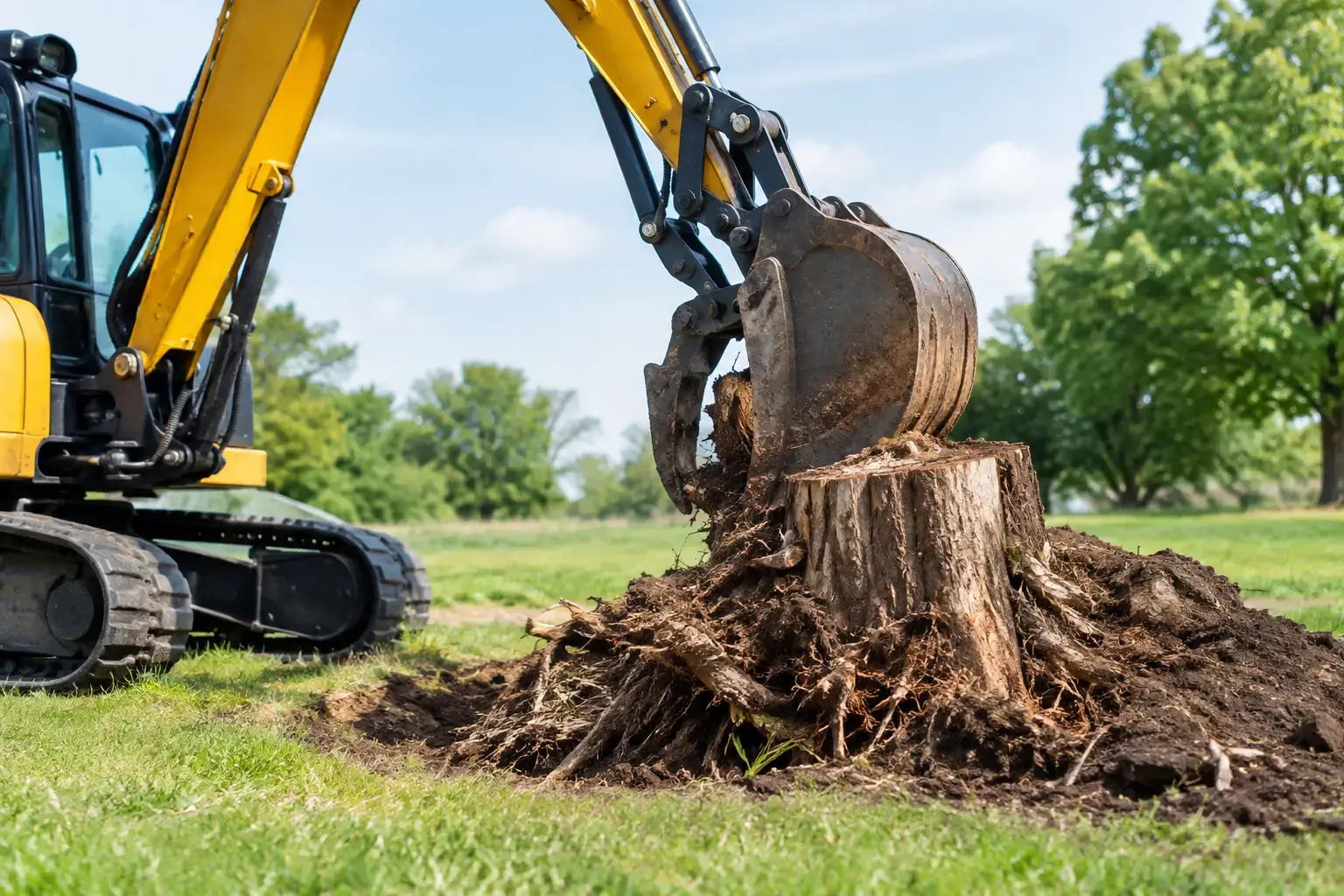
A freshly cut tree can make a yard look better overnight, but the work is not always finished at ground level. A remaining stump may be harmless in a back corner of a large lot, yet it can become a serious obstacle when you are planning a patio, driveway, fence line, drainage repair, or new construction. Stump excavation is the process of digging out the stump and its significant root structure rather than simply cutting or grinding the wood below grade.
For Middle Tennessee property owners, the right choice depends on what the land needs to do next. Excavation can provide a clean area for a building project, but it also creates more ground disturbance than stump grinding. Knowing the difference helps you avoid paying for more work than necessary or discovering roots in the middle of your next project.
What Stump Excavation Actually Involves
Stump excavation is a removal method that uses machinery to expose, loosen, and lift out the stump along with major structural roots. Depending on the tree species, age, soil conditions, and access, the root system can extend well beyond the visible stump. The crew digs around the stump, separates roots, removes the material, then grades and cleans the disturbed area.
The goal is not merely to make the stump less noticeable. It is to remove the woody mass that could interfere with excavation, footings, underground utilities, hardscape installation, or grading. The final hole must then be filled with suitable material and compacted as needed for the planned use of the site.
This differs from stump grinding. A stump grinder reduces the stump to wood chips below the surface, usually leaving the deeper roots in place to decay naturally over time. For many lawns and landscaped areas, grinding is the more efficient, lower-impact solution. Full excavation is usually reserved for situations where the roots themselves are part of the problem.
When Full Stump Removal Makes Sense
The strongest reason for excavation is a project that requires stable, open soil. If a contractor needs to install a foundation, extend a driveway, build a retaining wall, set a large shed, or place utility lines near the stump, leaving buried wood and roots can create trouble later. As roots decay, voids can form and soil may settle. That is not a risk worth taking beneath a structure or heavily used surface.
Excavation may also be the practical choice when regrading a property. Water moves where the ground tells it to move. A hidden root ball or decaying stump can complicate a drainage plan, especially near a home, parking area, or commercial building. Removing the material gives the grading contractor a more predictable surface to work with.
It can also help when a stump is in a high-traffic location. Stumps along walking paths, near play areas, beside gates, or in equipment routes are trip hazards and obstacles. On farms and larger properties, they can damage mowers, bush hogs, and other equipment. If the area will be actively used, full removal may be worth the added disruption.
For a new planting location, the answer depends on the type of planting. Grass can often be established over a properly ground stump area after wood chips are managed and topsoil is added. A new tree, however, should not be planted directly over an old stump. If the new tree must go close to the former tree’s location, excavation may create a better planting zone and remove competition from old roots.
When Stump Grinding Is the Better Option
Not every stump needs to come out with an excavator. In fact, stump grinding is often the sensible recommendation for homeowners who want a safer, cleaner lawn without tearing up a large section of the yard. The process is generally faster, requires less access for heavy equipment, and causes less disturbance to nearby landscaping.
Grinding works well when the stump is away from a future structure, the surrounding grade will remain largely unchanged, and there is no need to remove deep roots. Once the remaining chips are handled correctly and the area is backfilled with soil, the lawn can usually be restored.
This is especially worth considering near established landscaping, irrigation lines, septic components, sidewalks, or mature trees that you want to protect. Excavation has a larger footprint. It may require removing fencing, navigating narrow access points, and repairing more lawn afterward. A good contractor should explain that trade-off before recommending either option.
At Men in Green, the first question is not which machine can reach the stump. It is what you plan to do with the space afterward. That answer guides the removal method, equipment choice, and scope of cleanup.
Roots, Utilities, and Access Change the Job
A stump can look straightforward from the surface and still be complicated below ground. Large hardwoods common across Middle Tennessee can have extensive root systems. Clay-heavy soils, rocky ground, slopes, wet weather, and limited access can all affect the approach.
Utilities are another major consideration. Underground electric, gas, water, sewer, communication lines, irrigation, and drainage systems may be present even when there are no obvious markers in the yard. Private lines, such as those running from a house to an outbuilding or landscape lighting, need special attention. A responsible crew plans around known utilities and works carefully in sensitive areas rather than treating every stump as an open-field job.
Access matters too. A backyard stump behind a narrow gate may not allow full-sized excavation equipment. In those cases, a different machine, hand work, grinding, or a phased approach may be needed. The right method should fit the site, not force the property to fit the equipment.
What Happens After the Stump Comes Out
Removing the stump is only part of the work. Full excavation leaves a hole and displaced soil that need to be addressed properly. For a lawn area, the hole is commonly backfilled, shaped to match the surrounding grade, and prepared for seed or sod. Because soil settles over time, some sites may need a final touch-up after weather and foot traffic have had a chance to compact the area.
For construction or hardscape projects, the requirements can be more specific. The excavated area may need engineered fill, compaction, gravel, or coordination with the builder’s grading plan. This is why it helps to schedule stump work before the next contractor arrives, not after forms are set or materials are delivered.
Wood, roots, and soil also have to go somewhere. Ask whether debris hauling, chip removal, backfilling, and final cleanup are included in the estimate. Clear scope details prevent surprises and help keep the job site safe and presentable when the work is complete.
Questions to Ask Before Scheduling Stump Excavation
Before approving removal, be clear about the future use of the area. Is the site becoming lawn, a garden bed, a parking pad, a building location, or a drainage route? A contractor can make a better recommendation with that information.
It also helps to discuss access, visible utilities, private utility lines, nearby structures, fences, irrigation, and trees you want protected. If you have plans from a builder or landscaper, share them. A few minutes of planning can prevent rework, damaged grounds, and delays later in the project.
Ask how deep the stump and roots will be removed, how the hole will be filled, and whether cleanup includes hauling the stump material away. If the area is part of a larger clearing project, confirm the order of operations so stump work supports the next phase instead of creating an obstacle for it.
Choose the Removal Method for the Land Ahead
Stump excavation is a valuable service when buried wood and roots stand in the way of building, grading, drainage, or safe property use. It is not automatically the best answer for every yard. Grinding often delivers the cleaner, more economical result when the area will remain lawn or landscape.
The best next step is an on-site assessment by a crew that can evaluate the stump, the surrounding property, and the work planned afterward. Honest recommendations, appropriate equipment, and thorough cleanup matter just as much as getting the stump out of the ground. When the removal method matches the future of the land, the space is ready to serve you well for years.