
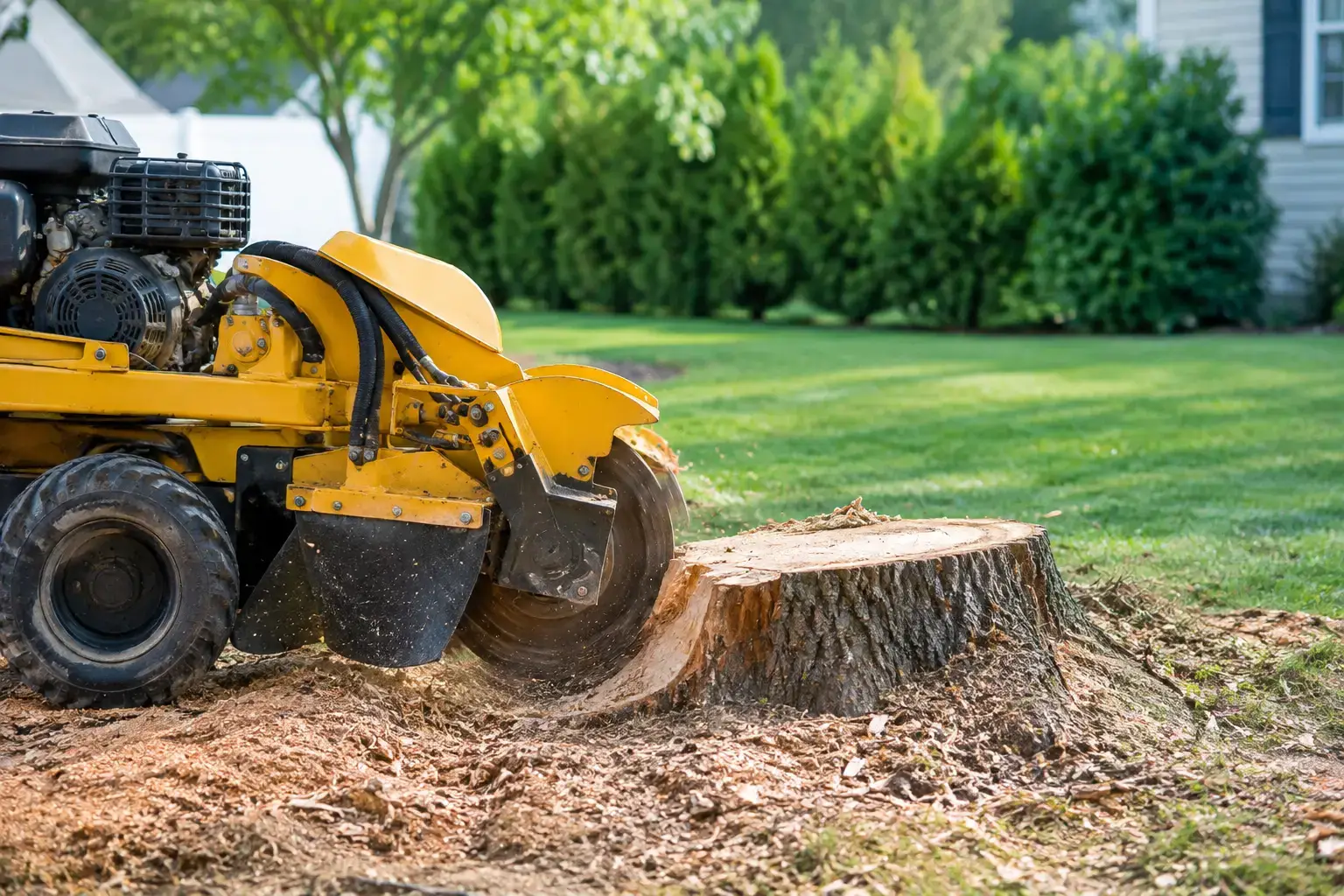
A stump left behind after tree removal can turn a clean-looking yard into a long-term problem. It takes up usable space, creates a mowing obstacle, attracts insects as it decays, and can become a trip hazard for children, guests, employees, or tenants. A professional stump grinding service removes the visible base of the tree so your property is safer, easier to maintain, and ready for its next use.
For Middle Tennessee homeowners, commercial property managers, HOAs, and landowners, the right approach depends on the stump’s size, location, root system, and plans for the area. Grinding is often the practical answer, but it should be done with the right equipment, a careful assessment, and full cleanup when the work is complete.
Why stumps are more than a cosmetic issue
A stump may seem harmless, especially when it sits near a fence line or at the edge of a larger lot. Over time, though, it can cause real maintenance and safety concerns. Grass is difficult to mow around, exposed roots can interfere with landscaping, and a decaying stump may harbor ants, termites, beetles, and fungi.
On commercial grounds and shared residential properties, stumps can also create liability concerns. A low stump hidden by leaves or tall grass is easy to miss. For property managers responsible for walkways, playground areas, parking lot islands, common spaces, or tenant-facing grounds, removing that hazard is usually a smart maintenance decision.
There is also the question of future use. If you plan to install a fence, expand a driveway, add a garden bed, build a patio, or prepare land for construction, an old stump can stand in the way. Removing it early prevents a smaller project from becoming more complicated later.
What a professional stump grinding service does
Stump grinding uses a specialized machine with a rotating cutting wheel to break down the stump below ground level. The goal is to remove the visible stump and create a workable area that can be covered with soil, grass, mulch, or new landscaping.
The depth of grinding matters. For many lawn areas, grinding several inches below grade is enough to remove the hazard and allow the area to be restored. If a property owner plans to pour concrete, build a structure, plant a replacement tree nearby, or complete a more involved landscape project, deeper grinding and root removal may be needed.
That is why a clear conversation before the work begins is valuable. A crew should ask what you plan to do with the area, not simply grind every stump to the same depth. A good estimate accounts for access, stump diameter, species, number of stumps, surface roots, nearby utilities, fencing, irrigation, and the final condition you expect from the site.
Grinding is not always the same as full root removal
Tree roots can spread well beyond the stump, particularly with mature trees. Grinding removes the central stump and the root flare near the surface, but it does not automatically mean every root on the property is excavated.
In many cases, that is exactly what property owners need. Remaining roots usually break down over time underground without causing a problem. However, a root system that is lifting a sidewalk, interfering with a foundation area, crossing a planned driveway, or blocking construction may require more extensive removal.
Full root removal is more disruptive than grinding alone because it can involve excavation, soil disturbance, and additional restoration. It is often worthwhile when the land is being developed or when roots are causing a specific problem. For a typical residential lawn, grinding the stump and addressing only troublesome roots may be the more cost-effective choice.
When stump grinding makes the most sense
Stump grinding is usually the best option after a tree has been removed, but timing can vary. Some property owners choose to have the stump handled during the same visit as tree removal. This is efficient because the crew, equipment, and cleanup plan are already on site.
Others wait until they are ready to start a landscape or construction project. That can work, although an older stump may become softer, attract pests, or complicate mowing in the meantime. If the tree was removed after storm damage, prompt grinding can also help restore access and make the property feel finished again.
Grinding is especially useful when a stump is located near a lawn, driveway, play area, walkway, garden, or commercial entrance. It is also a practical choice for landowners clearing fence lines, preparing pasture access, maintaining acreage, or making room for new planting.
There are a few situations where a stump may be left in place temporarily. A remote stump in wooded acreage may not affect how the land is used. In a natural area, leaving it to decay can provide habitat. But near active parts of the property, the cost of avoiding a problem often outweighs the benefit of leaving it behind.
What affects stump grinding cost
The size of the stump is one of the biggest factors. A wide, mature hardwood stump generally takes more time and machine work than a smaller ornamental tree. Tree species also matters because dense wood can be slower to grind.
Access is another important consideration. A stump in an open front yard is different from one behind a narrow gate, beside a pool, on a slope, or tucked between utility equipment and a fence. Crews may need smaller equipment or additional preparation to protect the surrounding property.
The final scope also affects pricing. One stump may be a straightforward job, while several stumps across a lot may require more planning. Surface root removal, haul-off of excess grindings, backfilling, and site restoration can all be included based on the property owner’s needs. A clear estimate should explain what is covered so there are no surprises when the job is complete.
Protecting the property during the work
Stump grinding is powerful work, but it should not be careless work. The grinding wheel produces wood chips and debris, so the crew should assess nearby windows, vehicles, structures, irrigation heads, landscape beds, and utility markers before starting.
Experienced operators use equipment appropriate for the site and take steps to control debris. On tight residential lots, that attention makes a difference. On commercial sites, it helps keep entrances, sidewalks, parking areas, and tenant spaces orderly while work is underway.
Homeowners can help by moving vehicles, outdoor furniture, decorations, and other items away from the work area before the crew arrives. If you know of underground irrigation, invisible pet fencing, septic components, or other private lines, point them out during the estimate. Public utility locations should be addressed before digging or extensive root work begins.
What happens after the stump is ground
Grinding creates a mix of wood chips and soil often called stump grindings. These materials can be left on site for use as mulch in some situations, but they are not always the right material for filling the hole and growing grass. As the wood chips decompose, they can settle and may temporarily affect soil balance.
For a lawn restoration, the area is typically cleaned up, backfilled with suitable soil as needed, and leveled. Grass seed or sod can then be installed based on the season and the homeowner’s landscaping plan. Keep in mind that some settling is normal as remaining roots decay below the surface. A small amount of additional soil later may be needed.
If the goal is to replant a tree, choose a location away from the old stump whenever possible. Freshly ground areas may contain roots and wood material that make establishment more difficult. A qualified tree care professional can help determine whether the original location is suitable or whether a nearby placement will give the new tree a better start.
Choose a crew that handles the whole job
The lowest quote is not always the lowest overall cost if it leaves you with scattered debris, an uneven hole, damaged turf, or questions about what was actually removed. Look for a company that explains the process, brings professional equipment, protects the work area, and discusses cleanup before the work starts.
For properties in Smyrna and across Middle Tennessee, Men in Green provides stump grinding and root removal with the same safety-focused approach used for tree removal and land clearing. The goal is straightforward: remove the problem, respect the property, and leave the site ready for what comes next.
A stump does not need to remain the part of your yard you work around. With an honest assessment and the right level of removal, that space can return to being useful ground instead of an ongoing obstacle.