A mature oak beside a driveway, a row of maples along a commercial entrance, or a healthy shade tree near a future addition can add real value to a property. Tree preservation plans give owners and contractors a clear way to protect those trees while still making room for construction, clearing, drainage work, utility access, or landscape improvements.
The goal is not to save every tree at any cost. Some trees are structurally weak, declining, poorly located, or already damaged beyond a reasonable chance of recovery. A useful plan identifies which trees are worth protecting, what could harm them, and what work needs to happen before equipment arrives on site.
What Tree Preservation Plans Do
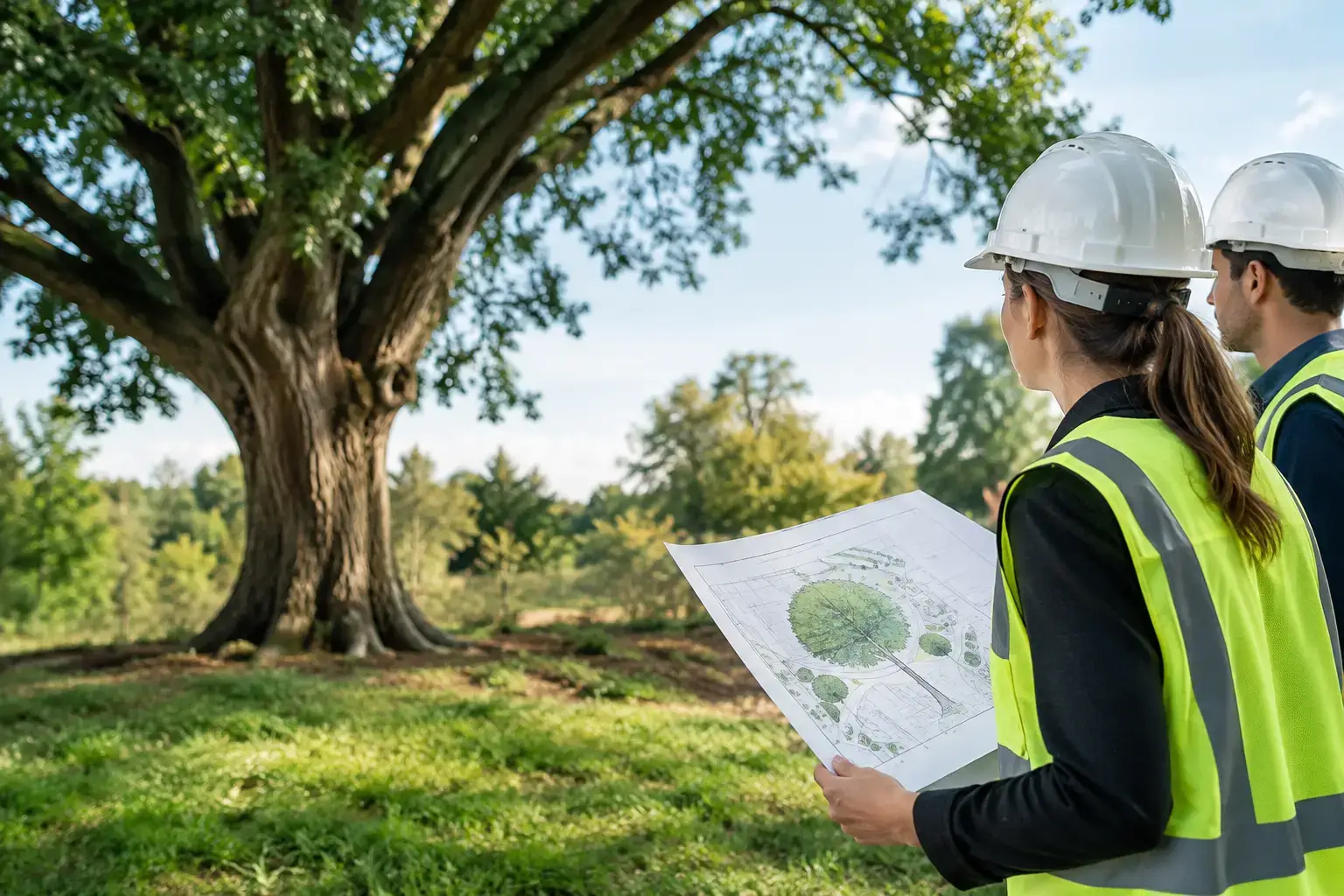
A tree preservation plan is a practical site plan for retaining selected trees during property work. It documents the trees to protect and sets boundaries around their root systems, trunks, and canopies. It also helps everyone involved understand where equipment, materials, spoil piles, access routes, and grade changes can and cannot go.
For a homeowner, that may mean protecting a favorite hardwood while adding a pool, building a detached garage, installing a new driveway, or reworking a backyard. For an HOA, retail center, apartment community, farm, or development site, it may mean preserving trees that provide shade, screening, curb appeal, or stormwater benefits.
The biggest benefit is prevention. Tree damage often happens before anyone notices it. A machine may scrape the trunk, compact soil over feeder roots, cut roots during trenching, or raise the grade around the base of the tree. The tree can look fine when the work is complete, then decline over the next one to three years. By then, the original damage is difficult or impossible to correct.
Start With an Honest Tree Assessment
Before marking trees for preservation, look at their condition and their place on the site. A large tree is not automatically a good candidate. Size, health, species, structure, location, and remaining growing space all matter.
A tree with major dead limbs, visible decay, a split trunk, root damage, poor branch structure, or a heavy lean toward a home may be better removed before construction begins. Keeping a hazardous tree just because it is mature can create a larger safety problem later. On the other hand, a healthy, well-established tree that is properly spaced from the work area may be worth protecting.
Middle Tennessee properties often include mature oaks, maples, hickories, cedars, and ornamental trees near homes and businesses. Each responds differently to root disturbance and pruning. Some can tolerate limited impacts when the work is carefully managed. Others may decline quickly after trenching, soil compaction, or grade changes. That is why a plan should be based on the actual trees on the property, not a one-size-fits-all rule.
Decide What Success Looks Like
A preservation plan works best when the owner sets priorities early. Is the goal to retain shade around a home? Preserve visual screening along a property line? Keep valuable trees that support the appearance of an entrance? Meet project or neighborhood requirements? Or reduce the number of replacement trees needed after clearing?
Those priorities help determine where compromise is possible. Moving a driveway a few feet, changing a staging area, or adjusting a utility route can make the difference between a tree that survives and one that becomes a future removal job. In other cases, the cost or limitations of saving a tree may outweigh the benefit. Clear decisions early keep the project moving.
Protect the Root Zone, Not Just the Trunk
Many property owners think tree protection means wrapping the trunk or placing a few boards around it. Trunk protection can help prevent direct impact, but roots are usually the greater concern.
Most of a tree’s active roots are relatively close to the soil surface and spread well beyond the trunk. Heavy equipment compresses the soil, reducing the oxygen and water movement roots need. Excavation can remove important roots in minutes. Stockpiling dirt, gravel, mulch, or construction materials around the tree can also smother roots and change how water drains through the area.
A good plan establishes a clearly marked protection zone around each retained tree or group of trees. The size of that zone depends on the tree’s trunk size, species, condition, and the work being performed. In general, more protected ground is better, especially for mature trees with broad canopies.
Once the protection zone is set, it should be treated as off-limits. No parking, storing materials, dumping brush, washing concrete equipment, trenching, or driving across it. Temporary fencing is more effective than tape because it gives equipment operators a visible physical boundary.
Coordinate Clearing, Grading, and Utility Work
Tree preservation is not a separate step added after the site plan is complete. It needs to be coordinated with land clearing, stump removal, grading, drainage, fencing, paving, and utility installation.
For example, if a new utility line must pass near a retained tree, a contractor may be able to adjust the route or use a lower-impact method rather than open trenching through major roots. If grading is planned near the tree, the team should evaluate whether the proposed cut or fill will affect root health and water flow. A tree that was healthy before a project may struggle when the soil level changes around its base.
Access planning matters too. Contractors need space to work safely, but repeated traffic is hard on tree roots. Identify equipment routes and material staging areas before work begins, then keep them outside preservation zones whenever possible. This is especially important on tight residential lots and active commercial properties where crews, deliveries, tenants, and customers share limited space.
Pruning Should Support the Plan
Pruning may be needed before construction to remove dead limbs, improve clearance, or reduce conflicts with equipment. It should be purposeful, not excessive. Removing too much live canopy at once can stress a tree that is already dealing with nearby disturbance.
Proper pruning focuses on dead, broken, rubbing, or poorly attached branches and on reasonable clearance needs. Topping a tree or cutting large healthy limbs simply to make work easier can create long-term decay and weak regrowth. If a tree cannot be retained without severe pruning or repeated conflicts with the finished project, removal and replacement may be the safer, more honest choice.
Monitor the Site After Work Starts
Even a well-drawn plan can fail if no one follows it. Before work begins, walk the property with the crews involved. Point out protected trees, fence lines, access routes, and areas where excavation or storage is prohibited. A quick conversation at the start can prevent expensive mistakes.
During the project, inspect fencing and protection zones regularly. If a vehicle has entered a restricted area, a trench has been moved, or materials have been placed too close to a tree, address it right away. Small corrections are easier before the site becomes active and crowded.
After construction, remove temporary fencing carefully and inspect trees for trunk wounds, broken limbs, soil changes, and drainage issues. Continued watering may help some retained trees during dry periods, particularly when nearby soil was disturbed. Watch for thinning leaves, early leaf drop, dieback, fungal growth, or new lean. These signs do not always mean a tree will fail, but they are worth evaluating before the problem grows.
When Removal Is the Better Decision
Preservation does not mean keeping every existing tree. A tree may need to come down when it presents a hazard, blocks necessary access, conflicts with the project footprint, has poor long-term health, or would require damaging cuts to remain. Removing a questionable tree before construction can be safer and less costly than trying to work around it, then facing an emergency removal later.
When removal is necessary, thoughtful replacement can still protect the appearance and function of the property. The right replacement tree, planted with adequate space and proper soil conditions, often performs better than a declining mature tree left in a bad location.
For Middle Tennessee property owners, the best time to discuss tree preservation is before clearing, excavation, or equipment scheduling begins. Men in Green can help evaluate the trees on your site, identify practical protection measures, and handle the trimming, removal, clearing, or cleanup work needed to keep the project safe and orderly. A few careful decisions before work starts can protect the trees worth keeping and prevent a costly surprise after the job is done.