A field can go from manageable to waist-high in a single Middle Tennessee growing season. Tall grass, volunteer saplings, thorny vines, and hidden debris make it harder to use the property and easier for small problems to become expensive ones. Knowing how to manage overgrown fields starts with an honest look at what is growing, what is underneath it, and what you need the land to do next.
The right approach is rarely just cutting everything down. A field intended for pasture needs different work than land being prepared for a home site, a commercial property, a trail, or routine acreage maintenance. Start with a plan, work safely, and establish a maintenance schedule before the growth returns.
Start With a Walkthrough, Not a Mower
Before bringing in a bush hog or skid steer, walk the perimeter and inspect the field from a safe distance. Look for old fencing, wire, rocks, fallen limbs, stumps, drainage ditches, utility markers, scrap metal, and low areas that hold water. These are common in fields that have been neglected for several seasons, and each can damage equipment or create a serious hazard.
Pay attention to the kind of growth you see. Grass and light weeds may only require mowing or bush hogging. Thick blackberry brambles, privet, kudzu, and young trees require more than one pass. Mature trees with dead limbs, leaning trunks, or storm damage should be assessed before crews begin working nearby. Cutting brush around an unstable tree can expose people and equipment to unnecessary risk.
It also helps to define the end use before any work starts. For example, clearing a field for livestock may mean leaving healthy shade trees and improving access to water. Preparing land for construction may require removing stumps and roots, addressing drainage, and creating a clean work area for surveyors, builders, or utility crews. The goal determines how far the clearing should go.
How to Manage Overgrown Fields in the Right Order
Most overgrown fields respond best to phased work. Trying to clear every issue in one aggressive pass can leave hidden stumps, damaged soil, and piles of debris that still need to be dealt with.
1. Open access and remove immediate hazards
First, create safe access for people and equipment. This may involve cutting back vegetation near gates, driveways, fence lines, and field edges. Remove downed limbs and visible debris before mowing. If brush is hiding a ditch, culvert, or embankment, mark that area clearly so equipment operators can avoid it.
Hazardous trees deserve separate attention. A dead tree can look stable until nearby brush is removed or equipment disturbs the ground around its roots. Professional tree removal is often the safer first step when large dead, damaged, or leaning trees are part of the field.
2. Bush hog tall grass and light brush
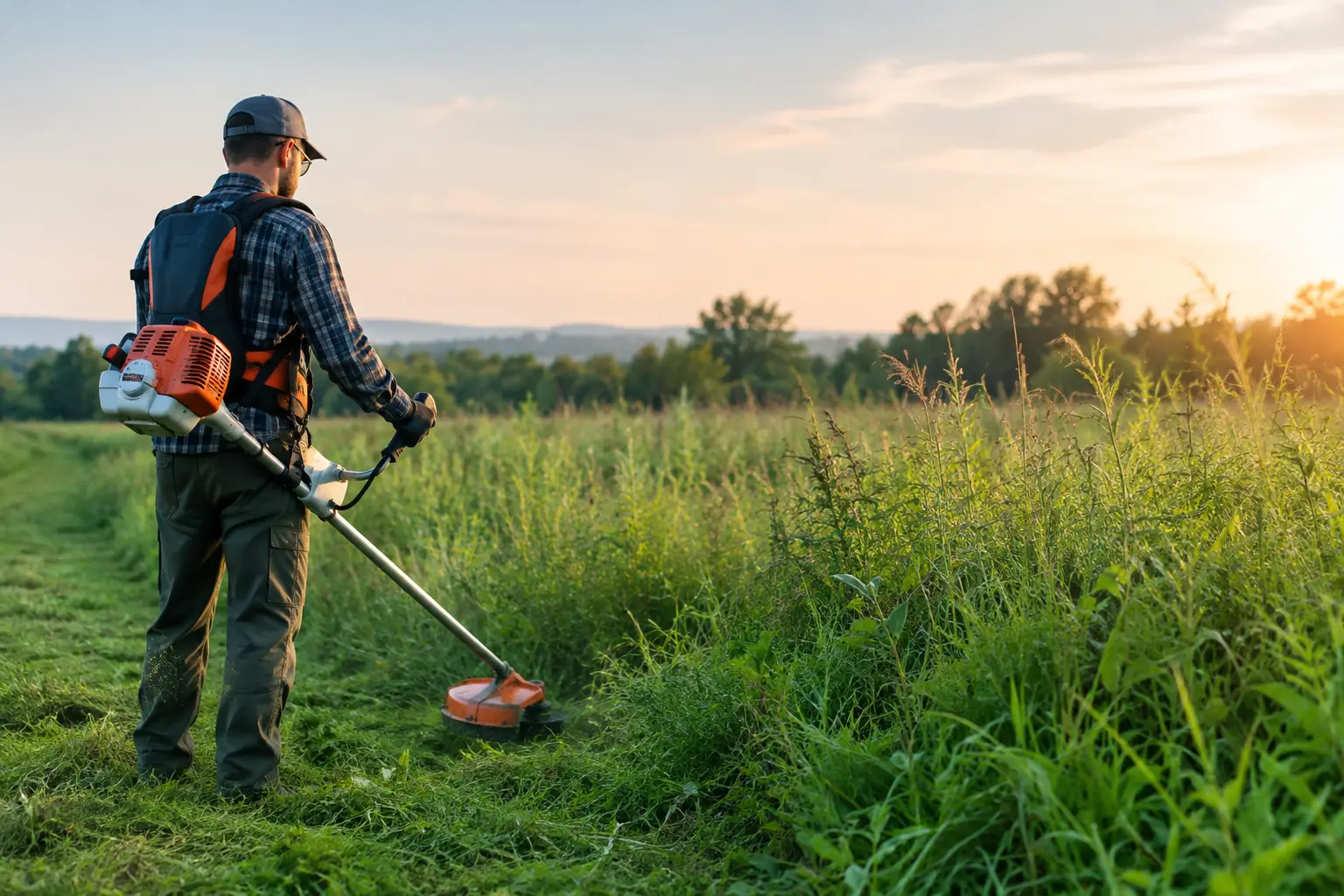
Bush hogging is usually the fastest way to reclaim a field covered in tall grass, weeds, and smaller brush. It improves visibility, reduces hiding places for snakes and pests, and gives you a clearer picture of the work ahead. On larger acreage, the right equipment can cover ground efficiently without the time and wear involved in using small residential mowing equipment.
A bush hog is not the answer for every condition. It is not designed to safely grind through large stumps, heavy logs, substantial rocks, or mature trees. It also will not remove root systems. If saplings and woody brush are thick enough to catch, bend, or break under mowing equipment, clearing may need to begin with cutting, mulching, or targeted removal.
3. Address brush, saplings, and invasive growth
Once the field is cut down, the remaining woody growth becomes easier to evaluate. Small trees may need to be cut and removed. Dense brush can be cleared mechanically, while persistent invasive plants may require a targeted treatment plan to keep them from coming back.
This is where property owners often underestimate the job. Cutting a vine or brush patch down to ground level can improve appearance for a few weeks, but many plants will return from roots, runners, or seeds. Repeated mowing can suppress some growth, while others need removal at the root or carefully timed treatment. The best method depends on the plant, the time of year, and whether the area is near a creek, pond, garden, livestock, or desirable trees.
4. Remove stumps when the future use requires it
Stump grinding is not always necessary in a rough field, but it becomes valuable where you plan to mow regularly, build, install fencing, create a driveway, or establish a usable lawn or recreation area. A hidden stump can damage equipment and create a trip hazard long after the tree itself is gone.
Grinding below grade makes the surface easier to maintain. For construction sites or areas where roots could interfere with future work, root removal may be the better choice. This is a practical decision, not a one-size-fits-all rule. Removing every root across open acreage may not be necessary, but leaving major root systems where a structure, pad, or utility line is planned can create problems later.
5. Protect drainage and soil
Clearing overgrowth can reveal drainage problems that vegetation had been hiding. Ruts, standing water, washed-out channels, and clogged culverts deserve attention before they turn into access issues or erosion. Avoid repeatedly running heavy equipment across saturated ground, especially in low areas. Deep ruts can be difficult to correct and may redirect water toward buildings, roads, or neighboring property.
Leave appropriate vegetation along ponds, creeks, and drainage channels where it helps hold soil in place. Clearing does not have to mean stripping the land bare. A well-managed field has room for access, visibility, and intended use while still protecting the soil from erosion.
Choose a Maintenance Schedule Before Growth Returns
The first clearing is usually the hardest part. Keeping the field under control is more affordable and less disruptive when it becomes routine. In Middle Tennessee, fast-growing grass and brush can quickly reclaim open ground during spring and summer, especially after periods of rain.
For many properties, bush hogging two or three times per year keeps grass and young brush manageable. Fields with heavy growth, invasive species, or high visibility may need more frequent attention. Areas near homes, commercial buildings, roads, walking paths, and fence lines should be checked more often because overgrowth can hide hazards and affect curb appeal.
Maintenance is also a good time to watch for new concerns. Look for storm-damaged limbs, newly fallen trees, drainage changes, fence damage, and young saplings getting established in the wrong place. Addressing them early costs less than waiting until the next full-scale clearing project.
Know When Professional Equipment Makes Sense
A homeowner with a small, open lot may be able to manage routine mowing with the right tractor and attachments. But overgrown fields often involve conditions that call for experienced crews and commercial equipment. Large acreage, thick woody brush, steep terrain, mature trees, hidden obstacles, and construction preparation all raise the stakes.
Professional land management also saves property owners from having to solve the disposal problem. Cut brush, logs, stumps, and debris need to be removed, chipped, hauled, or handled properly. A clean finish matters. Clearing that leaves piles scattered across the field is not a completed project.
Men in Green works with property owners across Middle Tennessee to assess the full scope of overgrown land, from bush hogging and brush removal to tree work, stump grinding, and site cleanup. A clear estimate should explain what will be cut, what will be removed, how the site will be accessed, and what the property will look like when the work is complete.
An overgrown field does not need to stay a question mark on your property. With safe access, the right equipment, and a maintenance plan that matches your goals, it can become usable ground again – whether that means a cleaner view, a safer commercial site, productive acreage, or a property ready for its next project.