A mature tree can look fine from the street while its support system is failing below ground. Learning the five signs of root damage helps property owners spot trouble before a tree becomes a safety concern near a home, driveway, parking area, fence, or play space. Roots do far more than anchor a tree. They carry water and nutrients, store energy, and help the tree withstand wind, saturated soil, and changing weather.
Root problems are easy to miss because they often develop after construction, grading, soil compaction, drainage changes, utility work, or a storm. The visible symptoms may not appear for months or even years. A careful evaluation can help determine whether a tree can be protected, needs monitoring, or has become too hazardous to keep.
Five Signs of Root Damage to Watch For
1. A sudden lean or shifting soil at the base
A tree that has always grown straight but begins leaning after a storm deserves prompt attention. A slight lean is not always an emergency – some trees naturally grow at an angle – but a new lean can mean roots have torn, loosened, or lost their grip in saturated ground.
Look closely at the soil around the trunk. Raised soil, cracks in the ground, a mound on one side of the tree, or exposed roots on the opposite side can indicate the root plate is moving. This is especially concerning when the tree is large or stands within reach of a structure, roadway, patio, or heavily used common area.
Do not try to pull the tree upright, add soil over exposed roots, or park equipment beneath it. Those actions can add stress or create a more immediate failure risk. Keep people away from the area and have the tree assessed by a qualified crew with the equipment to handle a removal safely if needed.
2. Thinning leaves, early color change, or dieback in the canopy
A tree’s canopy often tells the story of what is happening underground. When roots cannot absorb enough water and nutrients, leaves may be smaller than usual, sparse, pale, scorched along the edges, or prematurely yellow or brown. In Middle Tennessee, summer heat can make these symptoms more noticeable.
Dead twigs and branches in the upper crown are another warning sign. Root loss reduces the tree’s ability to support its full canopy, so branches may die back from the tips inward. This does not automatically mean the roots are the only problem. Drought, insect activity, disease, poor pruning, and normal seasonal stress can cause similar symptoms.
The difference is often the pattern. If canopy decline follows trenching, driveway work, soil filling, storm damage, or a major change in drainage near the tree, root injury becomes more likely. A professional assessment can separate a manageable health issue from a tree that is declining beyond recovery.
3. Mushrooms, soft wood, or decay near the trunk flare
The trunk flare is where the trunk widens as it meets the roots. It should be visible above the soil line, not buried beneath mulch or fill dirt. Mushrooms growing around this area, soft or crumbling bark, cavities, and dark wet-looking wood can point to decay affecting structural roots.
Not every mushroom is a danger signal. Fungi may feed on old mulch, fallen leaves, or dead wood in the yard. But repeated mushroom growth directly at the trunk base, particularly alongside canopy decline or a lean, should not be ignored. Some fungi are associated with root and butt rot, which can weaken the tree from the ground up.
Avoid cutting exposed roots or digging around the trunk to investigate. Root decay can make a tree less stable even when its trunk still appears solid. An experienced tree professional can inspect the visible conditions, assess the tree’s location and targets, and recommend next steps based on actual risk rather than guesswork.
4. Construction damage, compacted soil, or changed drainage
Root damage often starts during projects that seem unrelated to tree care. A new patio, sidewalk, driveway expansion, fence installation, utility trench, grading project, or parked heavy equipment can injure roots or compact the soil they need to function.
Most feeder roots are located in the upper portion of the soil and commonly extend well beyond the branch spread. Cutting a few large roots close to the trunk can affect stability. Repeated traffic over the root zone can squeeze air spaces from the soil, making it harder for roots to take in water and oxygen. Adding several inches of soil or mulch over the root flare can create a different set of problems by trapping moisture against the bark and reducing oxygen to surface roots.
Drainage changes matter, too. Roots adapted to normal soil moisture may struggle when runoff is redirected toward them, while trees can become drought-stressed when grading sends water away. The damage may not show right away. That delay is one reason property owners should plan around valuable mature trees before work begins, not after symptoms appear.
5. Exposed, broken, or severed roots
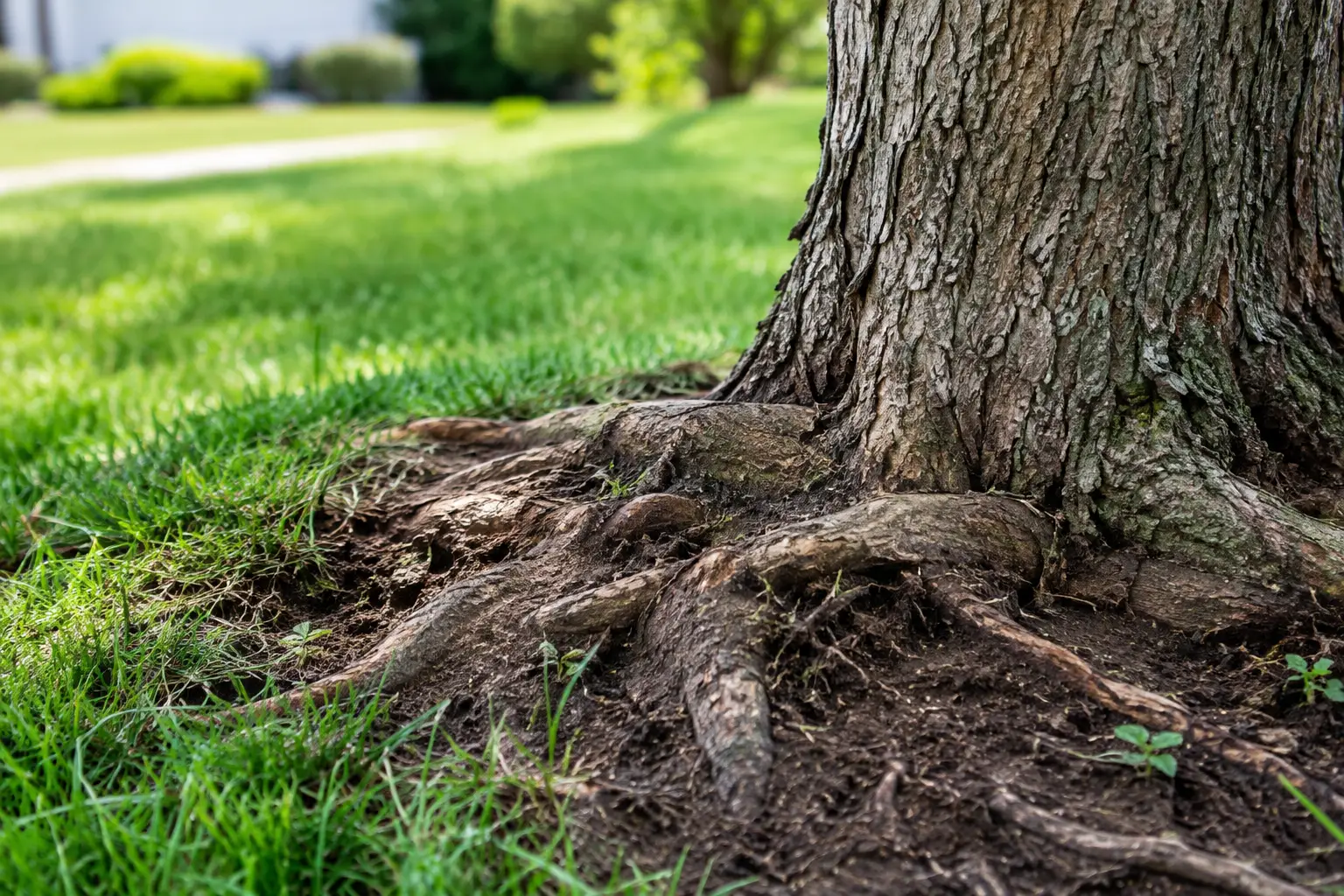
Visible root damage is the most direct warning sign. Roots can be torn out by uprooting, scraped by equipment, cut during trenching, damaged by erosion, or repeatedly wounded by mowing. Large roots that are cracked, crushed, or freshly cut deserve attention, especially if they are near the trunk.
A tree can sometimes tolerate limited root loss, depending on its species, age, health, soil conditions, and the size and location of the damaged roots. Younger, vigorous trees may recover better than large, mature trees. However, removing or injuring major roots on one side of a mature tree can create a stability concern, particularly on a slope or in wet soil.
Resist the urge to cover broken roots with dirt and assume the problem is solved. Keep the area protected from more traffic, avoid piling mulch against the trunk, and seek advice before making additional cuts or starting nearby construction.
What Causes Root Damage in Middle Tennessee?
Heavy storms are a common cause, but they are not the only one. Long periods of wet weather can soften soil and expose weaknesses in a root system. High winds can partially lift roots without bringing the entire tree down, leaving a tree unstable afterward.
Human activity is just as common. Landscaping changes, new utility lines, excavation, compacted soil around parking areas, and improper stump grinding near retained trees can all affect roots. Even routine yard practices can contribute over time when mulch is piled too high or soil is repeatedly disturbed around the trunk.
The best response depends on the tree and its setting. A declining tree in an open field may allow time for monitoring. The same tree beside a house, pool, power line, school walkway, or commercial entrance may require faster action because the consequences of failure are greater.
When to Call for a Tree Assessment
Call promptly if a tree develops a new lean, the ground is lifting around its base, large roots are exposed or severed, or major limbs begin dying without a clear explanation. Treat the situation as urgent after a storm if the tree is near people, vehicles, buildings, or utility lines. Never attempt to remove a compromised tree yourself, and keep clear of any downed electrical line.
For less immediate concerns, an assessment can still protect your property investment. A trained crew can look at the canopy, trunk flare, root-zone conditions, recent site changes, drainage, and the tree’s proximity to likely targets. That evaluation may lead to monitoring, selective pruning to reduce weight, removal of a hazardous tree, or recommendations for protecting nearby trees during future work.
Men in Green provides honest, safety-focused tree assessments and removal work for property owners across Middle Tennessee. When a tree must come down, professional equipment and thorough cleanup help keep the process controlled and the site ready for what comes next.
A healthy-looking canopy should never be the only measure of a tree’s condition. If something has changed at the base of the tree or in the soil around it, acting early gives you more options and helps protect the people and property beneath its branches.