A large, declining tree beside a house is not a job for guesswork. When property owners ask about crane removal versus climbing, they are usually trying to answer a practical question: which approach will remove the tree safely while causing the least disruption to the home, lawn, driveway, fence, or surrounding landscape?
The right answer depends on the tree, the work area, and access to the property. A crane can make certain difficult removals safer and more controlled. A skilled climbing crew can often handle trees where a crane cannot reach or where crane setup would create unnecessary cost. Both methods have a place in professional tree work across Middle Tennessee.
Crane Removal Versus Climbing: What Is the Difference?
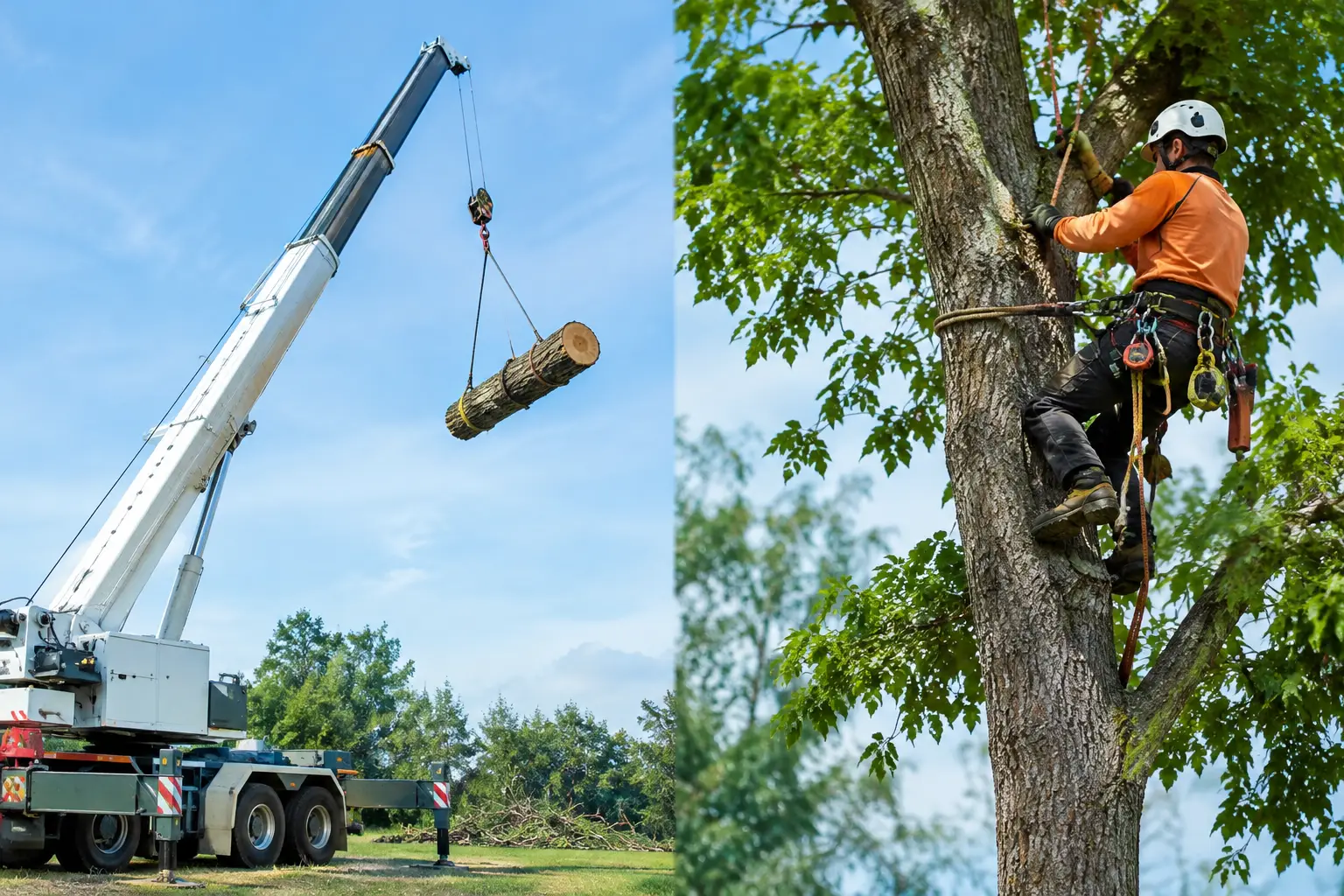
With crane-assisted removal, a crane is positioned within reach of the tree. A qualified tree crew attaches rigging to sections of the trunk or major limbs, makes a controlled cut, and the crane lifts each piece away from the work zone. The material is then lowered to a designated landing area for processing and removal.
Climbing removal uses trained tree climbers, ropes, harnesses, rigging, and specialized cutting techniques. The climber works from within the tree, removing limbs and trunk sections in manageable pieces. Those pieces may be lowered by rope, carefully dropped into a clear area, or moved with ground equipment once they reach the ground.
Neither method is automatically better. The key is selecting the method that fits the hazards and the site conditions rather than forcing every tree into the same process.
When a Crane Is the Better Choice
Crane removal is often the safest option when a tree has little room for error. This is particularly true for large trees leaning over a roof, swimming pool, power lines, retaining wall, busy parking lot, or other high-value target. Instead of relying on a section to swing or fall into a limited drop zone, the crane can lift it straight up and carry it away under the direction of the operator and tree crew.
A crane is also useful for trees that are structurally compromised. Storm damage, internal decay, split trunks, dead tops, and hanging limbs can make climbing more dangerous. If the tree cannot safely support a climber or tolerate the forces created by conventional rigging, lifting sections by crane may reduce the time workers must spend in the tree.
For some commercial properties, a crane can help complete a removal more efficiently. A large dead tree near a building entrance or apartment complex may require less time on site when material can be lifted over landscaping and placed directly in a processing area. That can mean fewer trips across turf, less exposure around pedestrian areas, and a more organized work zone.
Crane work does require proper access. The crane needs a stable setup location and enough clearance to operate. Driveway strength, overhead wires, soft ground, gates, nearby structures, and road access all need to be reviewed before the job is scheduled. A crane is powerful equipment, but it cannot solve an access problem that has not been planned for.
When Climbing Is the Better Choice
Climbing is often the practical choice for backyards, wooded lots, and properties with restricted access. Many Middle Tennessee homes have mature trees behind fences, beyond septic areas, down slopes, or tucked between neighboring homes. If a crane cannot get close enough to the tree, an experienced climber can still dismantle it methodically.
Climbing can also be more cost-effective for smaller removals or trees with open drop zones. A healthy tree that can be climbed safely and has room for controlled lowering may not need a crane. Bringing in large equipment when it is not necessary can add expense without providing a meaningful safety benefit.
This method calls for sound judgment from the crew. The condition of the tree matters as much as its size. A tree may look solid from the ground but contain decay at the base, a hollow trunk, weak branch unions, or storm damage higher in the canopy. Before climbing begins, the crew should assess whether the tree can safely support the work.
Climbing also gives a crew flexibility around delicate areas. With careful rope rigging, sections can be lowered around garden beds, fencing, patios, and utility lines where heavy equipment access is limited. It may take more time than crane removal, but a deliberate pace is often the right trade-off for a confined residential site.
The Factors That Determine the Right Method
A professional estimate should begin with a site inspection, not a quick guess based on a photo. The tree’s height and diameter matter, but they are only part of the decision.
Tree health comes first. A standing dead tree, a tree with visible decay, or one damaged by wind may need a crane even if access is not ideal. Conversely, a sound tree with strong structure may be a candidate for climbing and rope-assisted removal.
The location of the tree is equally important. A tree growing near a home does not automatically require a crane, but the available landing zones, rooflines, utilities, and neighboring property all affect the plan. A crew must consider where every limb and trunk section will go before the first cut is made.
Ground conditions can change the answer as well. Soft lawns after heavy rain, steep grades, narrow driveways, and buried utilities may limit where trucks or cranes can operate. On commercial sites, traffic flow, customer access, and required work-zone controls may influence scheduling and equipment selection.
Finally, consider the cleanup plan. Tree removal is not finished when the trunk is on the ground. Brush, logs, sawdust, and stump debris need to be managed safely. If stump grinding or root removal is part of the project, that work should be coordinated so the property is left ready for the next step, whether that is new landscaping, a fence, construction, or simple lawn restoration.
Safety Is More Than the Equipment Choice
A crane does not make a removal safe by itself, and climbing does not make a job risky by itself. Safety comes from planning, training, communication, properly maintained equipment, and a crew that knows when conditions have changed.
Weather is one example. Gusting wind can affect suspended crane loads and make climbing difficult. Wet ground may compromise equipment setup. Nearby power lines require special care and, in some cases, coordination with the utility provider. A responsible crew will pause or reschedule when conditions do not support safe work.
Property protection is another part of the plan. Before work starts, the crew should identify irrigation heads, septic components, outdoor lighting, fences, gates, landscape features, and areas where equipment may travel. Protective mats, controlled landing zones, and careful material handling can make a noticeable difference, especially on established residential lawns and commercial grounds.
What Property Owners Should Ask Before Scheduling Removal
The best question is not, “Do you use a crane?” It is, “What removal plan is safest for this tree and this property?” A qualified company should be able to explain the method in plain language and identify the conditions driving that recommendation.
Ask how the crew will protect the house, driveway, landscaping, and neighboring property. Ask whether the tree has signs of decay or instability that affect the work plan. Confirm what is included in cleanup, whether wood and brush will be removed, and whether stump grinding is available if needed.
It is also reasonable to ask about access. If crane work is recommended, find out where the crane will set up and whether vehicles need to be moved or gates opened. If climbing is recommended, ask how material will be lowered and where it will be processed. Clear expectations prevent surprises on removal day.
A Method Chosen for the Tree, Not the Sales Pitch
Some jobs require the reach and lifting control of a crane. Others call for the precision and flexibility of skilled climbing. The safest, most cost-conscious plan is based on the tree’s condition, the available access, and what needs protection around it.
For homeowners, HOAs, and commercial property managers in Middle Tennessee, Men in Green provides clear, on-site assessments backed by more than 30 years of regional experience. A free estimate is the right time to discuss crane access, climbing options, cleanup, and the condition of the tree before a small concern becomes an urgent removal.
If a tree is leaning, dropping large limbs, showing decay, or growing too close to a structure, do not wait for the next storm to make the decision for you. A careful evaluation now can identify the safest way to remove it and help protect the property you have worked hard to maintain.