A mature oak shading a driveway or a maple stretching over a roof can be one of the best parts of a Middle Tennessee property. But when the crown becomes crowded, heavy, or full of weak interior growth, that same tree may need professional canopy thinning. Done correctly, this is not about making a tree look sparse. It is careful pruning that improves structure while preserving the tree’s natural form.
For homeowners, HOA boards, and commercial property managers, the goal is simple: reduce preventable risk, protect the tree investment, and keep the property looking cared for. The method matters. Poor pruning can leave a tree stressed, unbalanced, and more vulnerable in the next storm.
What Canopy Thinning Actually Does
Canopy thinning is the selective removal of smaller live branches throughout a tree’s crown. A trained crew identifies overcrowded limbs, crossing branches, weak attachments, deadwood, and poorly placed growth. The remaining branches are spaced so the canopy can move more naturally in wind and receive better light and air circulation.
It is different from cutting back the outside of every branch. Proper thinning works from within the crown and keeps the tree’s overall shape intact. From the ground, a well-thinned tree should still look like the same tree. It should not look stripped, flat-topped, or hollowed out.
A thoughtful thinning plan can help reduce the weight carried by crowded limbs, lessen limb-to-limb rubbing, and allow more filtered sunlight below. That can make a noticeable difference for turf, planting beds, patios, walkways, and lower landscape plants that have been living in deep shade.
Signs a Tree May Need Canopy Thinning
Not every large tree needs thinning on a set schedule. Mature trees have different growth habits, site conditions, and past pruning histories. Still, several conditions are worth a closer look.
A canopy that appears unusually dense may trap moisture and limit airflow. Interior limbs that cross or rub can create wounds where decay or disease may begin. Long, crowded branches over a driveway, roofline, parking area, or pedestrian path can also become a concern when high winds and heavy rain move through Rutherford, Davidson, and Williamson counties.
Look up for dead branches caught in the crown, clusters of weak interior shoots, limbs growing toward a building, or large branches with tight V-shaped attachments. These do not automatically mean a tree requires major pruning or removal. They do mean the tree deserves an honest assessment before a routine storm turns a manageable issue into property damage.
For commercial sites and multifamily communities, visibility is another practical factor. Overgrown branches can block exterior lighting, signage, security-camera views, and vehicle sightlines. Pruning should improve clearance without sacrificing the shade and appearance that make the property more inviting.
More light is not always better
Property owners sometimes request heavy thinning because grass is struggling beneath a tree. More sunlight can help, but removing too much live canopy is not a healthy solution. Trees need their foliage to produce energy, manage heat, and respond to stress.
If the real issue is deep shade from a large, healthy canopy, a better answer may be selecting more shade-tolerant ground cover, adjusting the landscape plan, or selectively pruning only where light is needed most. Good tree care balances the needs of the lawn with the long-term health of the tree.
Why Proper Pruning Protects Trees and Property
A dense canopy catches wind differently than a well-spaced one. Selective pruning can reduce the sail effect of foliage while retaining strong scaffold branches and a balanced crown. That does not make a tree storm-proof. No pruning method can guarantee that a healthy-looking tree will not lose a limb during severe weather. It can, however, address known defects and excessive branch weight before storm season.
The benefit is especially relevant around homes, parking lots, fence lines, play areas, and utility corridors. A branch does not have to fall completely to create an expensive problem. Limbs scraping shingles, pressing against gutters, or growing into a structure can cause gradual damage that often goes unnoticed until repairs are needed.
Canopy thinning also gives an experienced tree professional a closer view of the tree. During the process, they may find decay pockets, damaged limb unions, old storm breaks, or insect-related decline that cannot be clearly seen from the ground. That information helps a property owner make decisions based on the tree’s actual condition, not just its appearance.
Canopy Thinning Is Not Topping
Topping is the severe cutting back of major limbs to stubs or indiscriminate removal of the top of a tree. It is often done in an attempt to quickly reduce height or clear a view. The result is usually a stressed tree that responds with fast-growing, weakly attached shoots.
Those shoots can create a bigger maintenance problem later. They are prone to failure, they rarely restore the tree’s natural structure, and the large cuts can expose the tree to decay. A topped tree may look smaller for a short time, but it often becomes less stable and less attractive over the following years.
A proper pruning crew uses reduction cuts, removal cuts, and selective thinning cuts based on the tree’s structure and the desired clearance. The work should respect the branch collar, avoid unnecessary wounds, and preserve enough healthy foliage for recovery. If a tree is simply too large for its location, repeated heavy pruning may not be the right long-term plan. Removal and replacement with a more suitable species can sometimes be the safer, more cost-effective choice.
Timing Depends on the Tree and the Problem
There is no single month that works for every pruning job. Dead, broken, or hazardous limbs should be addressed when they are identified, particularly if they are over a target such as a roof, driveway, or sidewalk. Waiting for the “perfect” season is not wise when safety is involved.
For planned maintenance, late winter is often a practical time to prune many deciduous trees because branch structure is easier to see before leaf-out. Crews can better identify crossing limbs, deadwood, and weak growth patterns. But timing also depends on species, health, weather, and the purpose of the work.
For example, some trees are more susceptible to pests or disease when pruned during certain conditions. Flowering trees may be pruned at different times depending on whether preserving the next bloom cycle matters to the owner. A knowledgeable assessment should consider the tree before setting the schedule, rather than treating every species the same.
How Much Thinning Is Too Much?
One of the most common pruning mistakes is removing too much at once. Excessive canopy removal can expose previously shaded bark to sunscald, reduce food production, trigger weak sprout growth, and leave the tree struggling to recover.
As a general rule, a mature tree should not lose more than about 20 to 25 percent of its live foliage in a single pruning cycle, and many trees need far less. The right amount depends on the tree’s age, species, condition, and the reason for pruning. A tree already under stress from drought, construction damage, compacted soil, or disease may need a lighter approach.
This is why an estimate should include more than a price. A property owner deserves to understand what will be removed, why it is being removed, how access will be handled, and what cleanup will look like when the work is complete.
What to Expect From a Professional Tree Crew
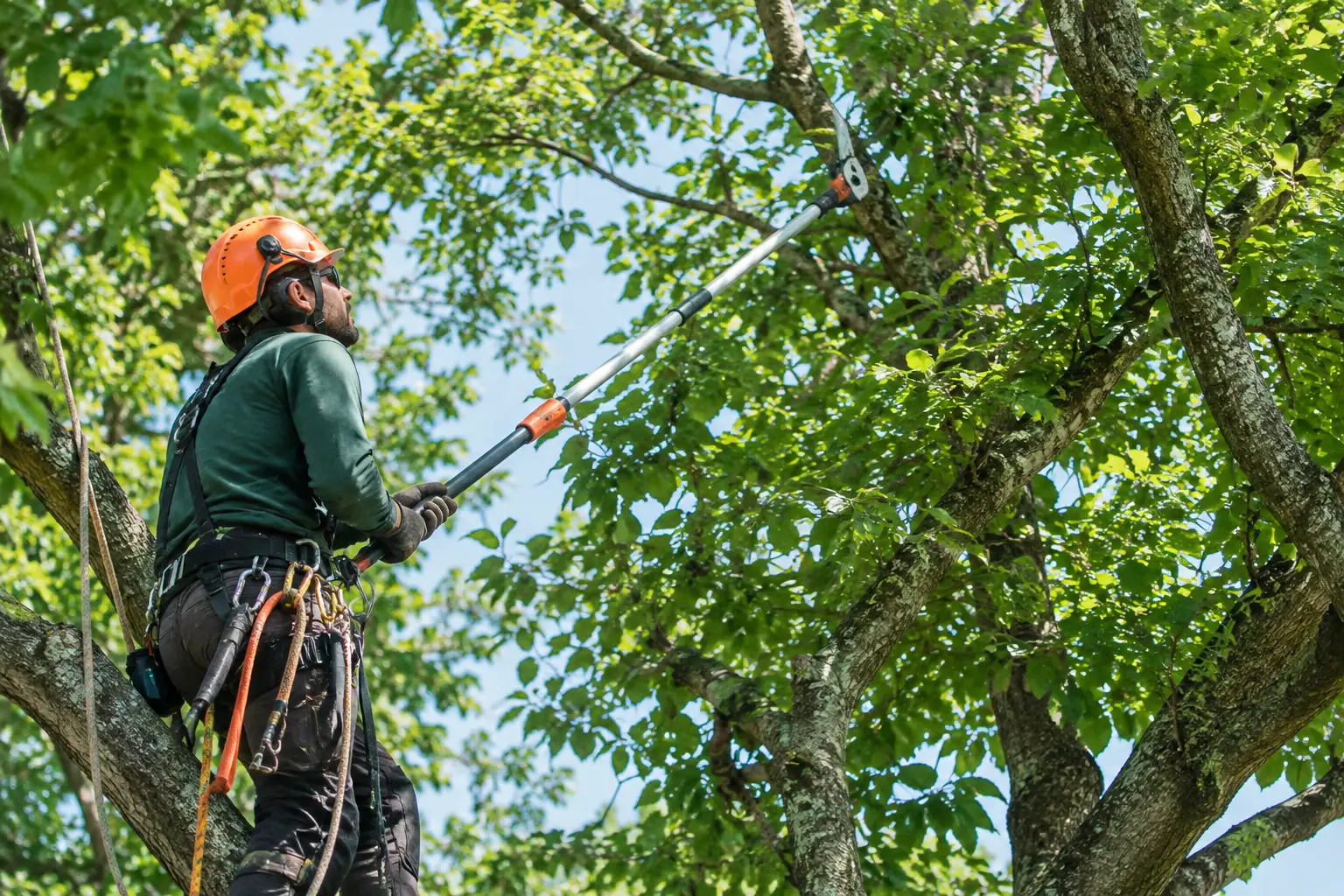
Safe canopy work requires more than a ladder and a chainsaw. Crews need to assess overhead hazards, access routes, nearby structures, utilities, drop zones, and the condition of the tree itself. In tight residential lots, precision matters. On commercial grounds, the work may also require traffic awareness, pedestrian controls, and scheduling around tenants or customers.
The right equipment depends on the tree and site. Some jobs call for climbing and rigging; others can be handled with aerial equipment where access allows. Either way, branches should be lowered and managed in a controlled manner rather than dropped carelessly across a lawn or drive.
Cleanup is part of professional work. When pruning is complete, the site should be cleared of brush, wood debris, and sawdust as reasonably as conditions allow. The goal is a safer, healthier-looking tree without leaving the property owner with a second job.
A Better Way to Care for Mature Trees
Canopy thinning is most effective before a tree becomes an emergency. Regular inspections help identify deadwood, crowded growth, clearance issues, and developing structural concerns while there is time to make measured decisions.
If a tree on your property looks overly dense, has limbs over a high-use area, or has changed after a storm, ask for a professional evaluation. Men in Green provides clear assessments and careful tree trimming for property owners across Middle Tennessee, with the safety of your trees, structures, and people kept in view from the first cut through final cleanup.