A mature tree can add real value to a Middle Tennessee property, but exposed roots can quickly become a headache. They catch mower blades, lift sidewalks, interrupt grass growth, and create trip hazards near driveways and walking paths. Managing exposed tree roots calls for a careful approach because the wrong fix can weaken or even kill a tree that took decades to grow.
The goal is not to make every root disappear. Surface roots are often a normal part of a tree’s structure, especially in compacted clay soil, shallow topsoil, or areas where the tree is competing with turfgrass. The right solution depends on the tree species, root size, location, property use, and whether the roots are causing a true safety or structural concern.
Why Tree Roots Rise Above the Ground
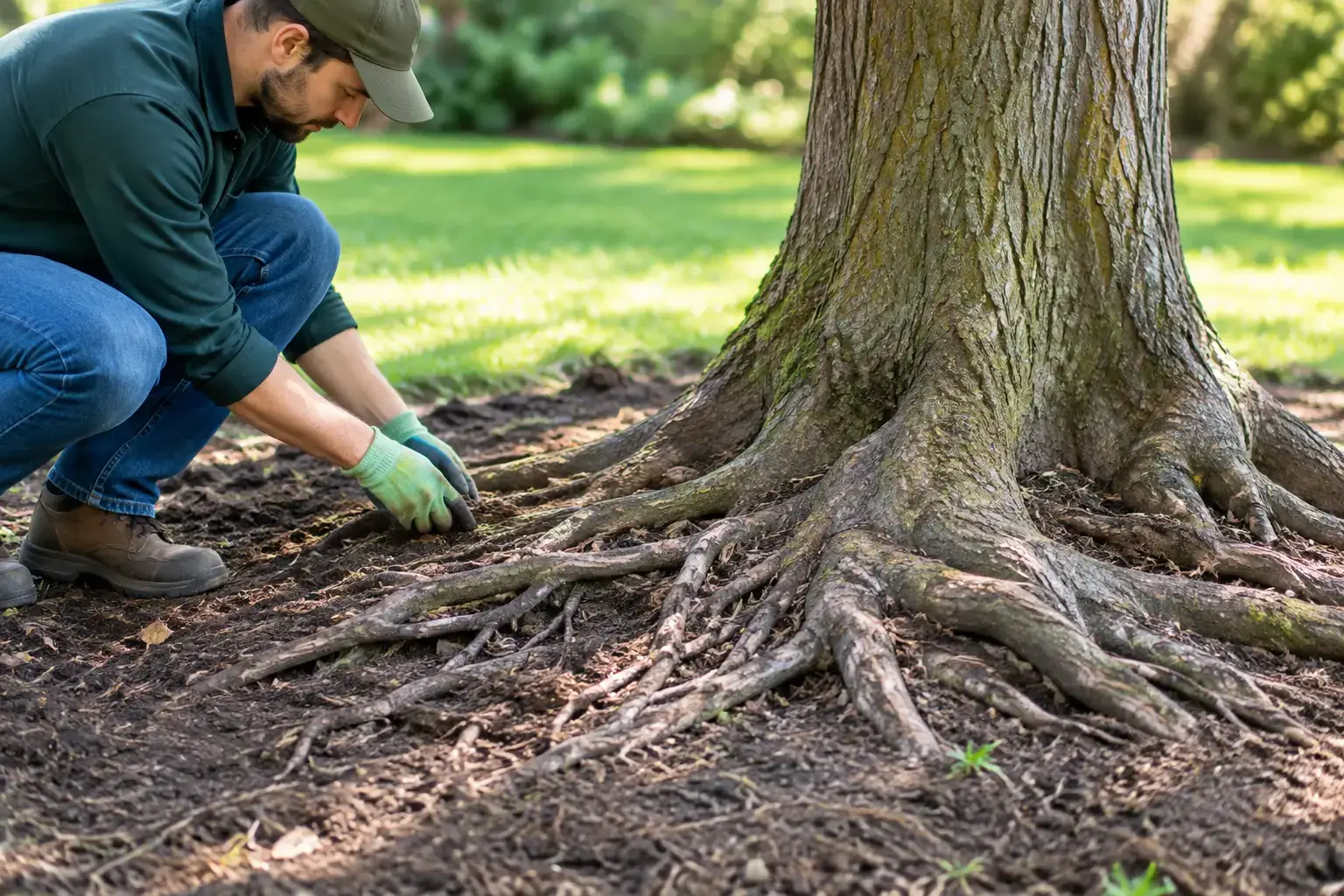
Most tree roots grow in the upper portion of the soil, where oxygen, moisture, and nutrients are easiest to find. Many of the roots that support and feed a tree may sit within the top 12 to 18 inches of soil. When soil is thin, compacted, eroded, or repeatedly watered near the surface, those roots may become visible.
This is common around older maples, oaks, sweetgums, and other mature shade trees. It is also common after years of mowing close to the trunk, foot traffic, construction activity, or changes in drainage. Exposed roots do not automatically mean a tree is unhealthy. In many cases, they simply show how that tree has adapted to its site.
The problem starts when roots interfere with the way a property needs to function. A raised root beside a front walk is different from a root showing in a low-traffic corner of a backyard. A root pushing against a retaining wall, patio, curb, or building foundation needs a closer look before anyone starts cutting or adding soil.
Managing Exposed Tree Roots Safely
The first rule is simple: do not cut roots just to make mowing easier. Large roots are part of the tree’s support system. Removing them can create a pathway for decay, reduce the tree’s ability to take up water, and make it less stable in high winds. That concern matters in Middle Tennessee, where saturated ground and storm winds can put added pressure on mature trees.
Before taking action, identify what the roots are affecting. Are they making lawn care difficult? Creating a trip hazard? Lifting concrete? Blocking a planned landscape bed? The best remedy should address that specific issue while disturbing the root system as little as possible.
Replace Grass With a Mulch Bed
For many homeowners, the safest and most practical answer is to stop trying to grow grass directly over prominent roots. Create a broad mulch bed around the tree instead. This protects roots from mower damage, reduces competition from turfgrass, retains moisture, and gives the area a cleaner appearance.
Use a natural, shredded hardwood mulch spread about 2 to 4 inches deep. Keep it several inches away from the trunk so moisture does not stay trapped against the bark. The mulch should look like a shallow, even ring or natural bed, not a steep pile around the base of the tree. Volcano-style mulch can contribute to decay, insect problems, and root issues.
A well-shaped mulch bed also gives you room to work around roots without constantly trimming grass or striking the root flare with landscaping equipment. For HOAs, apartment communities, and commercial properties, this can reduce ongoing maintenance damage around established trees.
Adjust the Landscape Around the Roots
If exposed roots are in a visible landscape area, consider using shade-tolerant ground cover or carefully placed mulch rather than forcing a traditional lawn to grow there. Avoid deep digging, rototilling, or planting large shrubs close to the trunk. Those activities can sever smaller feeder roots and compact the soil further.
Decorative stone is sometimes used around trees, but it has trade-offs. Stone can hold heat, compact soil, and make future root maintenance more difficult. It may work in a limited design setting, but mulch is usually the more tree-friendly choice.
Do not add a thick layer of topsoil over exposed roots in an attempt to level the yard. A few inches of soil can reduce oxygen reaching the roots and change drainage around the tree. Trees often decline slowly after this type of damage, so the connection is easy to miss until limbs begin thinning or dying back.
Address Walkways and Trip Hazards Properly
Roots near sidewalks, patios, and driveways require more planning. Cutting the root may seem less expensive than repairing concrete, but it can be the costlier decision if it destabilizes a large tree or leads to its removal later.
Depending on the site, a contractor may be able to raise or reroute a section of walkway, replace damaged concrete with a more flexible material, or adjust the grade around a path. On private residential properties, the choice may be straightforward. On commercial sites, multifamily communities, and HOA common areas, documented trip hazards should be handled promptly and with liability in mind.
If a root is lifting concrete substantially, do not assume the tree is the only issue. Poor drainage, failing sub-base material, and soil movement can contribute. A professional assessment can help determine whether the best answer is landscape adjustment, pavement repair, root management, or tree removal.
When Root Pruning May Be Necessary
Root pruning is sometimes necessary for construction, utility work, drainage improvements, or a severe hardscape conflict. It should not be treated as routine landscaping.
The size and location of the root matter. Cutting a small feeder root well away from the trunk is not the same as cutting a structural root several inches in diameter. As a general rule, the closer a root is to the trunk, the more risk there is to the tree’s health and stability. Species, age, soil condition, and the overall condition of the canopy also affect the decision.
When pruning is unavoidable, clean cuts with the right equipment are better than tearing roots with a backhoe or repeatedly chopping through them. The work should also be timed and planned around the tree’s condition, the amount of root loss expected, and the likelihood of storms. A tree that loses major roots on one side may need monitoring for lean, canopy decline, or decay over time.
Never cut roots on a tree that already shows warning signs without getting a professional opinion. Dead limbs, fungal growth at the base, a new lean, cracks in the trunk, hollow areas, or lifting soil around the root zone can indicate a more serious structural issue.
Avoid These Common Root Mistakes
A few well-intended shortcuts regularly cause long-term damage:
- Cutting large surface roots flush with the soil to improve mowing access
- Piling soil, gravel, or mulch deeply over the root zone
- Parking vehicles or storing heavy materials beneath the canopy
- Running trenching equipment close to the trunk without a root-protection plan
- Using herbicides or weed killers carelessly around exposed roots
Compaction deserves special attention. Construction traffic, parked equipment, and repeated heavy use can squeeze air out of the soil around a tree. The damage may not be visible right away, but stressed roots can lead to thinning foliage, branch dieback, pest problems, and a shorter service life for the tree.
Know When Removal Is the Safer Choice
Not every tree with exposed roots should be saved at all costs. If a tree is declining, structurally unsound, badly damaged by storms, or repeatedly causing significant damage to a foundation, utility line, retaining wall, or major access route, removal may be the responsible option.
That decision deserves an honest assessment. Removing a large tree changes shade, drainage, privacy, and the look of the property. On the other hand, waiting too long with a hazardous tree can put people, vehicles, buildings, and neighboring properties at risk. A qualified tree crew can evaluate the condition of the trunk, canopy, root flare, surrounding soil, and site constraints before recommending a path forward.
For property owners in Smyrna and across Rutherford, Davidson, and Williamson counties, the best time to ask for help is before roots become a major liability or a tree begins to decline. Men in Green can assess root-related concerns alongside trimming, removal, stump grinding, and site-clearing needs, then provide a clear estimate based on what the property actually requires.
A healthy mature tree does not need a perfectly flat lawn around it. Give its roots room to do their job, protect the areas people use every day, and make changes that solve the problem without creating a larger one.