A field can look overgrown for several different reasons. It may have waist-high grass after a wet season, dense blackberry thickets along a fence row, young cedar trees taking over a building site, or storm-damaged brush piled at the edge of the woods. Forestry mulching versus bush hogging is not simply a question of which machine cuts faster. The right choice depends on what is growing, what you want the land to become, and how clean or finished the site needs to be when the work is done.
For Middle Tennessee property owners, choosing the wrong method can mean paying for a job that does not solve the real problem. Bush hogging is often the practical answer for maintaining open ground. Forestry mulching is usually the better fit when brush, saplings, and unwanted woody growth have moved in. Knowing the difference helps you plan work that protects your property and your budget.
What Bush Hogging Is Best For
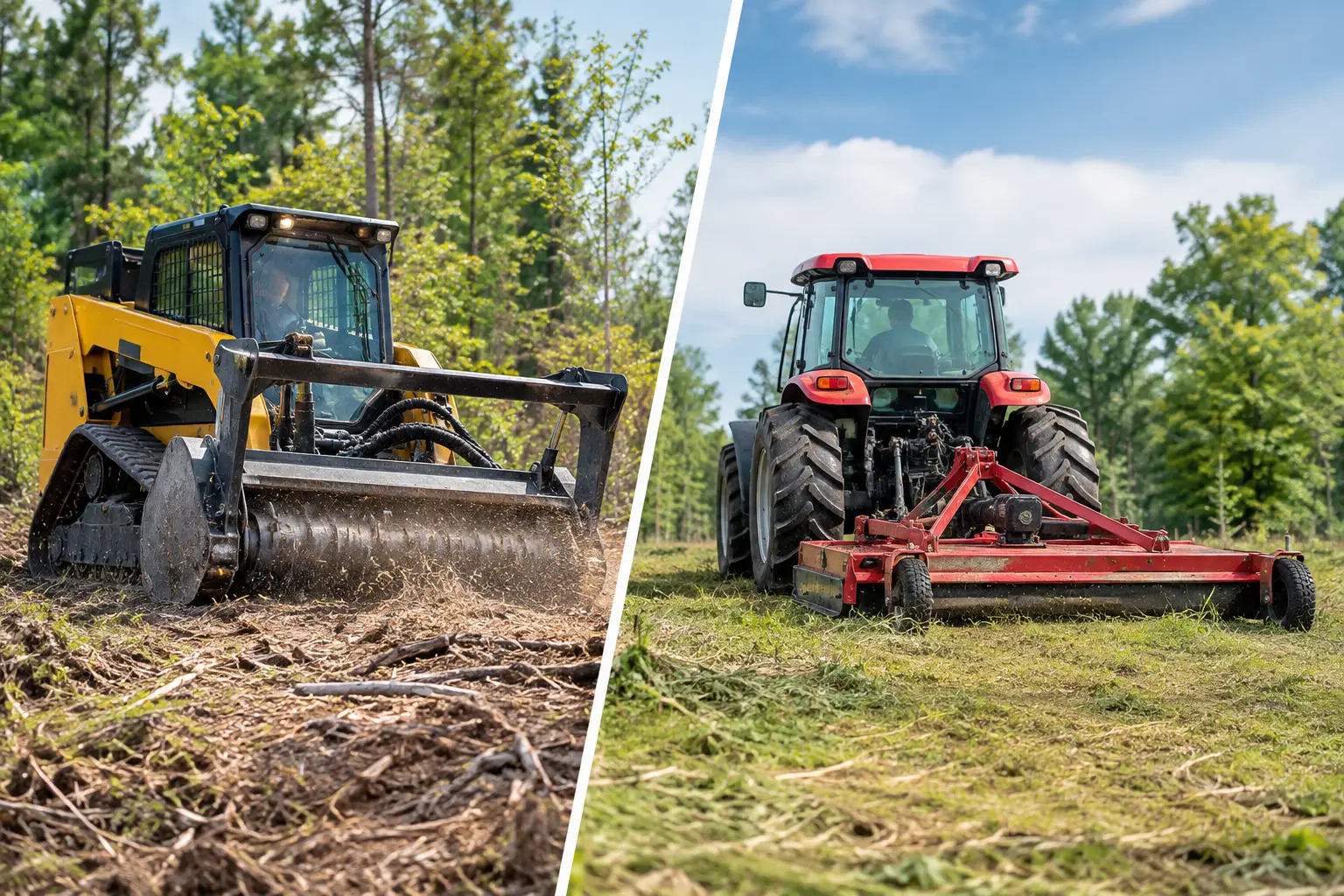
Bush hogging uses a heavy-duty rotary mower designed for rough ground. It cuts tall grass, weeds, light brush, and small woody stems that would overwhelm a standard finish mower. It is a maintenance service, not a full land-clearing method.
For a pasture, large yard, undeveloped lot, utility area, or field that has gotten out of hand, bush hogging can quickly restore access and improve appearance. It is commonly used to keep grass and weeds under control before they become a hiding place for pests or a fire concern. Regular cutting also makes it easier to inspect fence lines, drainage areas, and the edges of a property.
Bush hogging works best when the land is already mostly open. The mower cuts vegetation near ground level, but it does not remove established shrubs, tree stumps, large vines, or thick stands of young trees. If a field has been neglected long enough for cedars, privet, multiflora rose, or heavy brush to take hold, bush hogging may knock it back without eliminating the underlying woody growth.
That can still be useful. In some cases, a property owner only needs a path reopened or a field made manageable before deciding on the next phase of work. But repeated mowing of dense brush can be hard on equipment, and cut woody plants often return from the root system.
When Forestry Mulching Makes More Sense
Forestry mulching uses a specialized machine with a mulching head that grinds brush, vines, small trees, and woody vegetation into mulch. Instead of cutting and leaving large debris that must be piled, hauled away, or burned, the machine processes much of the material where it stands.
This approach is particularly effective for reclaiming overgrown acreage, opening wooded edges, creating trails, clearing fence rows, improving sightlines, and preparing a property for future use. It can handle vegetation that is well beyond the capability of a bush hog, including thick brush and many small-diameter trees. The mulch left behind forms a ground cover that helps reduce erosion, retains moisture, and can slow the return of some weeds.
Forestry mulching is not the same as clearing a site to bare dirt. Mature trees, large stumps, rock, steep slopes, buried debris, and construction-grade site preparation may require different equipment or a combination of services. If the goal is to build a home, install utilities, or create a level commercial pad, forestry mulching may be an early step rather than the entire solution.
A professional evaluation matters because every site has different conditions. A few acres of light saplings may mulch efficiently, while a smaller area filled with large trees, old fencing, dumped materials, or hidden rock can require more careful planning. The safest, most cost-effective plan begins with an honest look at access, terrain, vegetation, and the finished result you expect.
Forestry Mulching Versus Bush Hogging: Key Differences
The main difference is the type of vegetation each service is meant to manage. Bush hogging cuts grass and lighter growth. Forestry mulching grinds and processes heavier brush and small trees.
The finish is different, too. After bush hogging, cut grass and brush remain on the ground in larger pieces. That is usually fine for field maintenance and pasture use. After forestry mulching, vegetation is broken down into a more even layer of mulch. This creates a cleaner look in heavily overgrown areas and makes it easier to walk or drive through the cleared space.
Cost depends on the job, not just the acreage. Bush hogging generally requires less specialized equipment and can be the more economical option for open land that needs routine upkeep. Forestry mulching costs more because it uses specialized machinery and is intended for tougher material. However, it may save money compared with cutting, piling, hauling, and disposing of thick brush through separate steps.
The long-term result also matters. A bush-hogged field generally needs continued mowing to stay open. Forestry mulching can reclaim land that has become brushy or wooded, but vegetation will still regrow over time if the area is not maintained. Many properties benefit from an initial forestry mulching project followed by scheduled bush hogging to keep the ground usable.
Choosing the Right Service for Your Property
Start with your objective. If you want to maintain an open field, control tall grass, or keep a large lawn area presentable, bush hogging is likely the right service. If you want to turn tangled brush, young trees, and overgrown fence lines into usable ground, forestry mulching is usually the better answer.
It also helps to consider what is underneath the growth. A field may look like tall weeds from the road but contain hidden stumps, discarded wire, rocks, or old farm equipment. Forestry equipment and bush hogs can both be damaged by concealed hazards, and those hazards can create safety risks for nearby structures, vehicles, livestock, and people. A careful walk-through before work begins is part of doing the job responsibly.
For homeowners, the decision often comes down to whether the property needs maintenance or reclamation. For commercial sites, HOAs, and development properties, the question may involve visibility, access, drainage, tenant safety, and future construction plans. Clearing too aggressively can create erosion concerns, while leaving brush unmanaged can block access and make grounds look neglected. The right scope balances appearance, function, and the condition of the land.
Local Conditions Can Change the Plan
Middle Tennessee properties frequently combine rolling ground, clay soil, hardwood edges, cedar growth, and heavy seasonal rain. These conditions affect how equipment should enter and move across a site. Wet ground may need time to dry before work can be completed without rutting the area. Steep terrain may require a different approach than a level pasture, and wooded properties often need careful protection of the trees worth keeping.
Property lines and utilities deserve the same attention. Before land clearing begins, identify boundaries, marked utility routes, septic components, drainage features, and any trees you want preserved. If a project involves removing mature trees or grinding stumps after clearing, those services should be planned together so the work progresses efficiently and the site is left clean.
A good contractor should explain what the equipment can realistically accomplish, what material will remain on site, and whether follow-up maintenance is recommended. Clear expectations prevent surprises and help you compare estimates based on the actual scope of work instead of price alone.
A Practical Approach to Overgrown Land
For many properties, the best answer is not strictly one method or the other. Forestry mulching can open areas where brush and saplings have taken over. Bush hogging can then maintain the newly accessible ground several times a year, depending on rainfall, use, and the type of vegetation present.
That combination is especially useful for acreage that will serve more than one purpose. A landowner may want a clean entrance and trails for access while retaining a natural wooded border for privacy. A homeowner may need brush cleared behind the house but only routine mowing in the open portion of the lot. Matching the equipment to each section avoids overworking areas that only need simple maintenance.
Before scheduling work, take a few photos from the property edges and think about how you want the land to function six months from now. Whether the goal is safer access, a maintained field, a cleaner fence line, or a site ready for the next phase, Men in Green can provide a clear assessment and a free estimate based on the work your property actually needs.