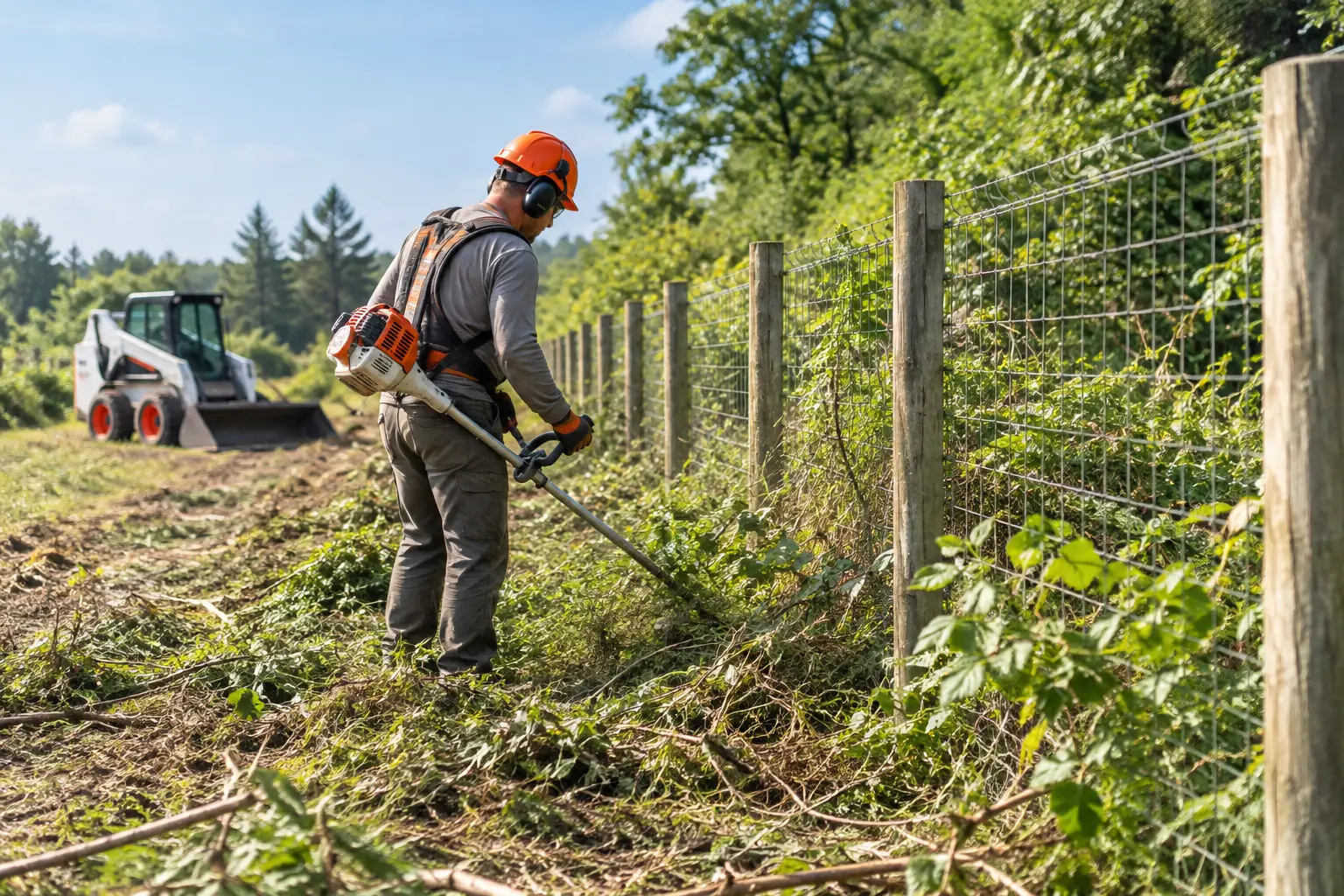
A fence can still be standing and yet fail at its job. When vines pull at wire, saplings grow through boards, and brush hides broken sections, a property boundary becomes harder to inspect, maintain, and trust. Professional fence line clearing removes that buildup so owners can see the condition of their fencing, reach problem areas, and protect the land on both sides of the line.
For Middle Tennessee property owners, this is rarely just a cosmetic project. Thick vegetation can hold moisture against wood, strain gates, create hiding places for pests, and turn a simple repair into a larger job. On farms, residential acreage, commercial sites, and HOA common areas, a clear fence row makes routine maintenance safer and more manageable.
What Fence Line Clearing Actually Includes
Fence line work is not the same as mowing a strip of grass. A properly cleared line may involve cutting back briars, brush, volunteer trees, invasive vines, fallen limbs, and low-hanging branches that interfere with the fence. The right approach depends on the fencing material, terrain, nearby trees, drainage, and the purpose of the property.
Around a newer privacy fence, the goal may be to create enough open space for inspection, staining, repairs, and normal trimming. Along a farm boundary, the work may involve opening an overgrown corridor so livestock fencing, gates, and posts are visible and accessible. A commercial property may need brush removed along a perimeter fence to improve site appearance and help staff monitor the boundary.
Clearing should also account for what needs to remain. Mature, healthy trees can provide valuable shade, screening, and erosion control when they are not damaging the fence or limiting access. The job is not to remove everything in sight. It is to remove the growth that is causing a problem while keeping the property functional and presentable.
Why Overgrowth Can Damage a Fence Line
Vegetation does more than make a fence look neglected. Vines can wrap around wire or boards and steadily add weight as they grow. In wet weather, that added load can pull sections out of alignment or weaken already stressed posts. Woody stems growing against a fence may push panels apart, bend wire, or make it impossible to open a gate fully.
Brush also traps moisture. Wood fencing that stays shaded and damp for long periods is more likely to develop rot, while metal components may corrode faster where debris and moisture collect. Even vinyl fencing can be affected when heavy limbs rub against it or roots shift soil around posts.
There is a safety side as well. A hidden downed section can create an opening for pets, livestock, trespassers, or wildlife. Thorny brush and unstable limbs make inspection difficult, especially after a storm. If a fence borders a roadway, parking area, drainage ditch, or neighboring property, limited visibility can create additional concerns.
Start With the Boundary, Not the Brush
The most costly mistake in fence line clearing is assuming the visible fence is the legal property line. In many cases, a fence was placed inside a boundary, moved over time, or built before a current owner purchased the property. Clearing beyond your property without permission can lead to unnecessary conflict with a neighbor.
Before work begins, confirm where the line is and discuss access with adjoining owners when appropriate. If survey markers are uncertain, a current survey may be worth reviewing before clearing a long corridor. This is especially true for acreage, development sites, and properties with old fencing.
Utility awareness matters too. Underground lines, irrigation components, drainage structures, and communication cables may be near a fence row. A professional crew should assess access, terrain, overhead limbs, and equipment needs before starting. Cutting brush with the wrong equipment in the wrong place can damage fencing, posts, utilities, or nearby landscape features.
Choosing the Right Clearing Method
There is no one method that fits every property. Light seasonal growth may only need trimming and removal by hand. Dense brush and small trees may require brush-cutting equipment, chainsaws, or forestry attachments. Larger dead or leaning trees near a fence often call for controlled tree removal rather than simple clearing.
The condition of the existing fence changes the plan. A weak or aging fence may not tolerate vibration from heavy equipment working too close to the posts. In that situation, crews may need to clear more selectively and remove material away from the fence line by hand. On open acreage with no fragile fencing to protect, larger equipment can make the work more efficient.
Slope and soil conditions also matter. Middle Tennessee properties often include rolling ground, wet low spots, creek edges, and rocky areas. Heavy equipment can be useful, but it must be matched to site conditions to avoid rutting, soil disturbance, or damage to drainage patterns. The fastest approach is not always the best approach if it creates a cleanup or erosion problem afterward.
When Trees Are Part of the Problem
Small saplings can often be cut back, but larger trees near a fence deserve a closer look. A tree leaning toward the line, showing dead limbs, or growing between fence sections may pose a greater risk than the brush around it. Removing only the visible vegetation may leave the real issue in place.
Tree roots can gradually lift or shift fence posts. Limbs can scrape panels during high winds. A dead tree may stand quietly for months before dropping onto a boundary fence during a storm. In those cases, addressing the tree before it fails can prevent emergency repairs and limit damage to neighboring property.
Stumps matter as well. If a stump sits in the path needed for fence repair, mowing, or equipment access, grinding may be the practical next step. The decision depends on the planned use of the area. A stump far from the fence may be harmless, while one beside a gate or access lane can remain an ongoing obstacle.
A Clear Line Makes Maintenance Easier
Once a fence row has been cleared, keeping it open is much less difficult than reclaiming it after years of growth. Regular trimming, bush hogging where appropriate, and prompt removal of fallen limbs can prevent vines and volunteer trees from taking over again.
The best maintenance schedule depends on the property. A shaded line near woods may need attention more often than an open pasture boundary. Commercial and multifamily properties may benefit from scheduled grounds maintenance because appearances and accessibility affect tenants, visitors, and daily operations. Homeowners may only need seasonal service around the most heavily wooded portions of their yard.
It also helps to leave enough working room beside the fence. A narrow, maintained strip allows owners to walk the line, spot loose wire or failing posts, and reach damaged areas without fighting through thorns and brush. That simple access can make a major difference after heavy rain, high winds, or a fallen tree.
When It Is Time to Call a Professional
Property owners can handle minor trimming, but dense growth along a long fence line becomes physically demanding and potentially hazardous. Thick vines can conceal wire, holes, sharp debris, and uneven ground. Trees near power lines, structures, roads, or neighboring property should not be treated as routine brush removal.
Professional help is also a good choice when the project requires multiple services at once, such as brush removal, tree removal, stump grinding, hauling, and final cleanup. Coordinating those pieces through one experienced crew keeps the work moving and avoids leaving piles of cut material behind.
Men in Green provides fence line and land-clearing work with the equipment and local experience needed for properties across Middle Tennessee. A clear estimate should account for the vegetation involved, access conditions, disposal needs, and any trees or hazards that require special attention.
A fence line does not need to stay hidden until it becomes a repair problem. Clearing it now gives you a safer place to walk, a boundary you can inspect, and a property that is easier to care for through every season.