
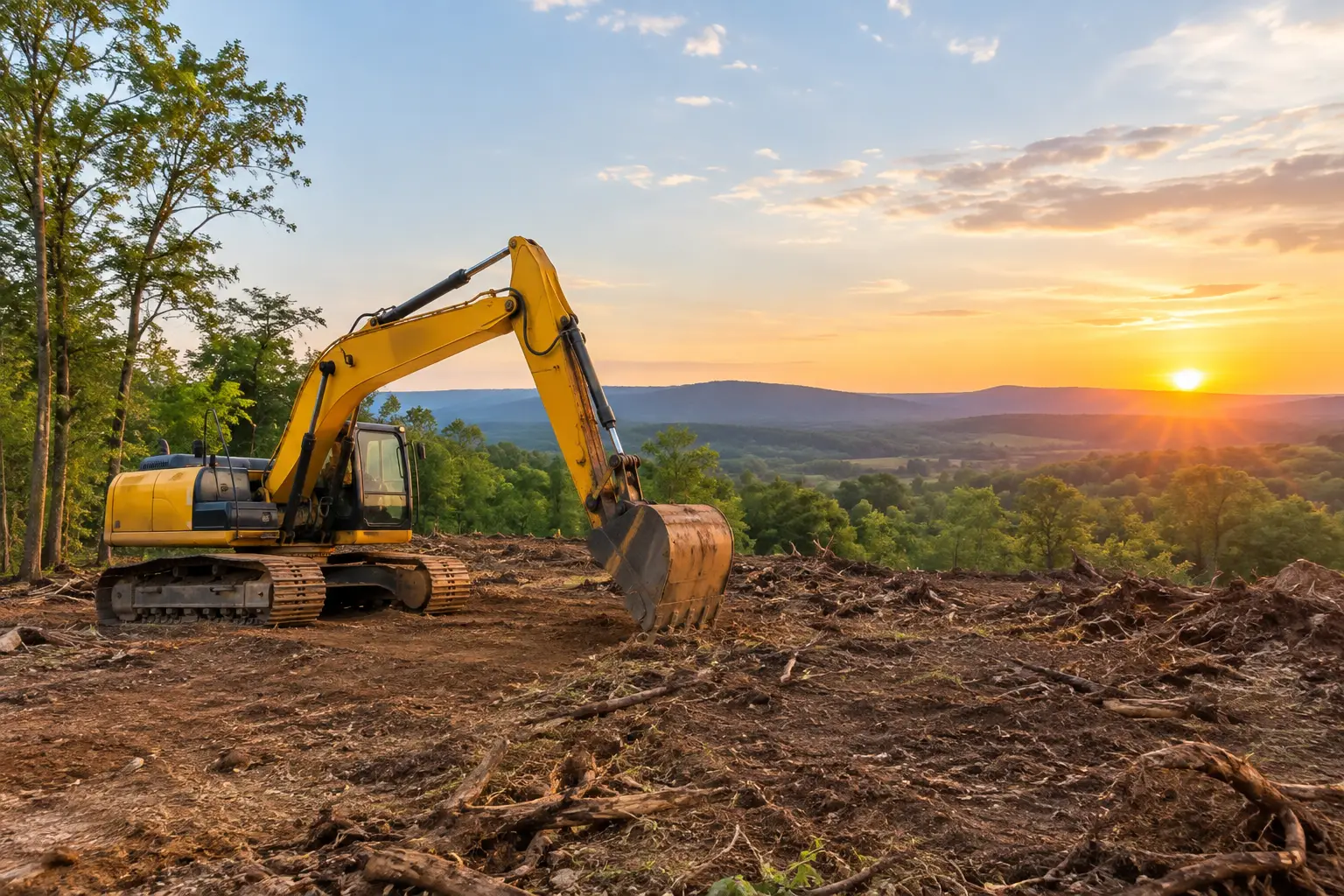
A property can look manageable from the road and still hide thick brush, failing trees, old fence wire, stumps, and uneven ground. The best time for land clearing depends less on the calendar alone and more on what you need the land to do next. A home addition, pasture restoration, commercial build, drainage repair, or new access drive each calls for a different schedule.
In Middle Tennessee, weather and soil conditions matter. Our clay-heavy ground can turn soft after prolonged rain, while summer heat can make dry ground hard and dusty. A professional assessment helps property owners plan clearing when equipment can work safely, the site can be protected, and the next phase of the project is not held up.
When Is the Best Time for Land Clearing?
For many properties, late fall through winter is an efficient time to clear land. Trees and brush are often dormant, leaves are off the canopy, and crews can better see dead limbs, fence lines, slopes, drainage paths, and the full extent of invasive growth. Better visibility supports more accurate planning and helps prevent desirable trees from being removed by mistake.
Winter clearing can also put a site in a good position for spring construction, seeding, fencing, or landscaping. If a builder needs access in March or April, clearing the property earlier gives time to address stumps, grading, drainage, and erosion control before the construction schedule becomes tight.
That said, winter is not automatically the right answer. Heavy rain can soften the ground, particularly on slopes or low-lying areas. Equipment traffic on saturated soil can create ruts, disturb root zones, and complicate cleanup. The right window may be a dry stretch in winter, a stable period in fall, or a carefully planned summer project.
How Each Season Affects a Clearing Project
Winter: Better visibility and dormant vegetation
Winter is often a strong choice for wooded lots, fence-row cleanup, and acreage that needs a clear starting point before spring. Without heavy foliage, it is easier to identify hazardous trees, mark specimen trees to preserve, and locate structures or utility features near the work area.
Dormant vegetation can make brush handling more straightforward, but winter weather still controls the schedule. Frozen ground is uncommon for long periods in this area, and rain can quickly change site conditions. A crew should evaluate access routes and avoid working in conditions that risk unnecessary damage to the property.
Spring: Good for planning, challenging for wet ground
Spring shows what is alive, what is struggling, and where water moves across the property. For homeowners deciding which trees to retain, that information is valuable. It can also reveal drainage issues that were hidden during dry weather.
The trade-off is rain. Spring storms can delay equipment work and make muddy sites difficult to access. If clearing is needed before a spring build, schedule the evaluation well ahead of time rather than waiting until the contractor is ready to mobilize.
Spring is also a time to pay close attention to active bird nests and other wildlife activity. Landowners should not assume every tree or brush area can be cleared on the same timetable. A responsible site review can identify concerns before equipment arrives.
Summer: Reliable access when conditions stay dry
Summer can be a practical season for land clearing because longer days and drier ground often improve access. It works well for overgrown fields, bush hogging, access-road preparation, and lots where a property owner needs visible progress before a fall project.
Summer has its own challenges. Dense foliage can hide hazards, and dry conditions create dust during brush processing or stump grinding. Hot weather also adds stress to crews and equipment. On heavily wooded sites, owners should expect a careful walk-through before work begins so the scope is clear and protected areas are marked.
Fall: A strong balance for many properties
Fall frequently offers the best balance of workable soil, cooler temperatures, and a project window before winter. It is a good time to remove unwanted trees, reclaim neglected acreage, clear around commercial buildings, or prepare a lot for a project starting the following year.
Early fall may still have full foliage, while later fall improves visibility as leaves drop. If the goal is to seed grass or establish ground cover after clearing, timing matters. The site may need grading, topsoil work, or erosion-control measures before seed has a realistic chance to take hold.
Start With the Purpose of the Land
The most reliable way to choose a clearing date is to work backward from the property goal. A residential owner clearing for a pool, barn, driveway, or addition should allow time for stump and root removal, grading, utility work, and inspections. Clearing is only one part of site preparation.
For farms and larger acreage, the schedule may revolve around grazing, hay production, fence installation, or access for tractors. Clearing brush at the wrong time can interrupt normal operations, while clearing too late may leave no time to establish a usable surface before wet weather returns.
Commercial properties and HOAs often need a different approach. Safety, tenant access, traffic flow, noise limits, and a clean finished appearance may matter as much as the work itself. In those settings, phased clearing can be a better option than shutting down a large area all at once.
Do Not Clear Before Checking These Details
A clearing project goes more smoothly when the property owner knows what is below and around the work area. Utility locations, drainage easements, septic systems, wells, irrigation lines, old debris, and property boundaries can all change the plan. Even a seemingly open lot may have buried surprises.
Local requirements can matter as well. Depending on the location and scope, permits, tree-protection rules, grading requirements, or HOA approvals may apply. These requirements vary among communities in Rutherford, Davidson, and Williamson counties. Check them before setting a start date, especially when clearing is connected to new construction or significant grading.
Soil protection deserves the same attention. Removing vegetation exposes ground to rain and runoff. On slopes, near creeks, or on lots with drainage concerns, clearing should be coordinated with a plan for stabilizing disturbed areas. Leaving the site clean does not mean leaving it unprotected.
What Professional Timing Looks Like
The best projects are not rushed because a season sounds favorable. They are scheduled after an on-site review of tree condition, terrain, access, equipment needs, haul-off requirements, and the intended use of the property. That review should also determine whether selective clearing will serve the property better than removing everything.
Selective clearing preserves healthy shade trees, buffers, and natural screening while removing hazardous, overcrowded, damaged, or unwanted growth. It can improve safety and usable space without making a property look stripped bare. For many Middle Tennessee homes and commercial sites, that balance adds more long-term value than a total clear-cut.
Men in Green helps property owners plan land clearing around safe access, clean removal, and the work that follows. With more than 30 years of regional experience, the crew can identify practical timing concerns before they become costly delays.
If your land has become too overgrown to use safely, do not wait for the “perfect” month on the calendar. A clear plan, dry workable conditions, and enough time to prepare the site for its next purpose will usually matter far more than the season itself.