A heavy limb hanging over a driveway is not just a landscaping concern. It can damage a roof, block access, injure someone below, or turn a routine storm into an urgent property problem. Safe limb removal starts with recognizing the risk early and choosing a crew with the training, equipment, and judgment to bring the limb down without creating a bigger hazard.
For homeowners, HOAs, and commercial property managers in Middle Tennessee, the most difficult tree work is often not removing an entire tree. It is removing one compromised, overextended, or poorly placed limb while protecting the healthy tree, nearby structures, landscaping, utility lines, and people on the ground.
When a Tree Limb Needs Attention
Some limbs make their condition obvious. A large branch may be cracked, split at the connection to the trunk, hanging lower than usual, or resting on a roof. Others need a closer look. Decay can weaken wood from the inside, leaving a limb that appears sound until wind, rain, or added weight causes it to fail.
Call for an evaluation when you see dead branches in the canopy, peeling bark, fungal growth, deep cracks, or limbs rubbing against your home, gutters, chimney, fence, or power service line. Branches that extend over parking areas, sidewalks, playgrounds, patios, and entrances deserve particular attention. A healthy-looking limb can still pose a risk when it has poor structure or carries too much weight at the end.
Storm damage also calls for caution. After heavy wind, ice, or saturated soil, limbs may remain partially attached and under tension. They can shift unexpectedly as weight changes. Standing beneath a damaged limb, pulling on it, or attempting to cut it from a ladder can put a homeowner in the path of the failure.
Why Safe Limb Removal Is More Than a Single Cut
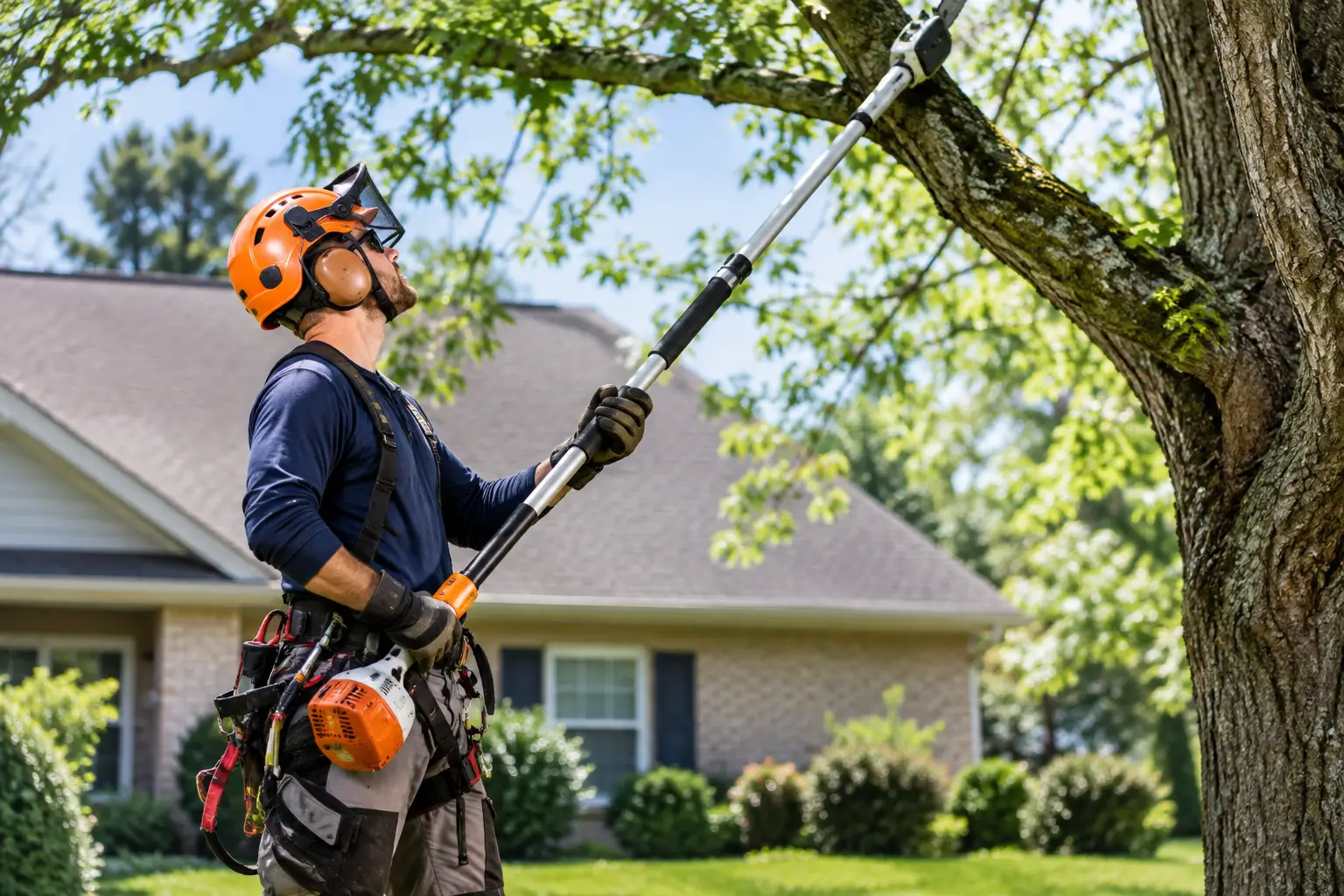
A professional crew does not approach a large limb as a simple cut-and-drop job. Before any work begins, the crew assesses the tree’s condition, the limb’s weight and direction of lean, attachment points, decay, wind exposure, and the space available below. They also identify nearby roofs, vehicles, fences, landscaping, service drops, and access routes for equipment.
The goal is controlled removal. Depending on the limb and site, that may mean reducing the limb in manageable sections, using ropes to guide pieces away from vulnerable areas, or positioning specialized equipment where access allows. The right method depends on the tree, the work area, and the consequences of a mistake.
This is especially true in tight residential lots common in Smyrna, Murfreesboro, Franklin, and surrounding communities. A limb may be only a few feet from a roofline, pool, shed, or neighbor’s fence. In those situations, the lowest-cost approach is not always the safest approach. Proper planning, experienced operators, and the right equipment protect the property around the tree as much as the tree itself.
The Ground Crew Matters
Tree work is a team operation. While one crew member works in the tree or operates equipment, others maintain the drop zone, manage ropes, watch for changing conditions, and process material safely. Clear communication is essential when heavy wood is moving overhead.
A professional ground crew also helps keep the property orderly. Brush and wood are moved out of access areas, work zones are kept clear, and cleanup is handled as part of the job. That matters for busy homes, apartment communities, retail properties, and facilities that need to remain accessible while maintenance is underway.
Pruning, Limb Reduction, or Full Removal?
Not every concerning limb requires removal back to the trunk, and not every damaged tree needs to come down. A qualified assessment should distinguish between work that improves the tree’s safety and structure and work that simply removes too much living canopy.
Pruning may be appropriate for smaller deadwood, crossed branches, limbs growing toward a structure, or areas where selective cuts can improve clearance. Limb reduction can help lower the leverage and weight on an overextended branch while retaining part of the canopy. Full limb removal may be the better choice when a branch is dead, severely cracked, diseased, poorly attached, or too close to a high-value target.
There are trade-offs. Removing too much at once can stress a healthy tree, expose interior limbs to sun, and encourage weak regrowth. Leaving a compromised limb in place can expose people and property to unnecessary risk. Good tree care weighs both concerns rather than treating every branch as a candidate for aggressive cutting.
Do Not Take Chances Around Utility Lines
Any limb near overhead electrical lines requires a different level of caution. Electricity can travel through branches, tools, ladders, and the ground. Even a branch that is not touching a line can move into it while being cut or lowered.
If a limb is on, near, or entangled with a power line, keep people away from the area and contact the utility provider or a qualified tree service. Do not attempt to move the branch yourself. This is not a situation for a chainsaw, a pole saw, or a ladder.
The same caution applies after storms. Downed lines may be hidden by limbs and debris, and they should always be treated as energized until the utility company confirms otherwise.
What Property Owners Can Do Before the Crew Arrives
Property owners do not need to prepare the tree itself. Leave climbing, cutting, and rigging to the professionals. A few practical steps can make the workday safer and more efficient, however.
Move vehicles out of the driveway or away from the work area if possible. Keep children, pets, and visitors inside or well away from the designated work zone. Let the crew know about septic systems, irrigation heads, underground utilities, gates, fragile landscaping, and any access limitations before equipment arrives.
It also helps to discuss the result you want. Are you looking for roof clearance, better driveway access, reduced storm risk, improved visibility, or a healthier structure for the tree? Clear expectations allow the crew to recommend work that solves the actual problem instead of removing more than necessary.
Questions Worth Asking a Tree Service
Tree work should never feel vague. Before hiring a contractor, ask whether the company is properly insured, how it plans to protect structures and surrounding grounds, and whether cleanup and debris removal are included in the estimate. Ask who will be on-site, what equipment may be used, and whether the crew has experience with limbs near roofs, fences, or utilities.
A clear estimate should describe the scope of work without promising results that do not fit the site. For example, a crew may be able to improve clearance from a roof but should not claim it can eliminate every future storm risk from a mature tree. Weather, tree health, root conditions, and future growth all affect the outcome.
Experience also has local value. Middle Tennessee trees face strong thunderstorms, wet springs, summer heat, and occasional ice events that can expose weak attachments and hidden decay. A crew familiar with local conditions is better prepared to recognize the warning signs and recommend practical work before a small issue becomes an emergency.
Protect the Tree and the Property Below It
Safe limb removal is about more than making a yard look cleaner. It is a way to reduce risk, preserve useful trees, maintain access, and protect the investments around them. The right work can keep limbs off roofs, open up a driveway or walkway, reduce interference with structures, and make the property easier to manage through storm season.
Men in Green brings more than 30 years of regional experience to hazardous limb removal, tree trimming, storm cleanup, and property maintenance across Middle Tennessee. The work begins with an honest assessment and a clear plan for your property, not a rushed recommendation from the ground.
If a limb looks cracked, dead, overextended, or too close to a place where people live, work, park, or walk, address it before the next hard wind makes the decision for you.