A wooded lot can look like a blank canvas, but it is rarely a simple clearing job. Mature trees, hidden stumps, steep grades, drainage paths, utility lines, and storm-damaged limbs can all affect what happens next. This guide to wooded lot preparation helps Middle Tennessee property owners plan the work in the right order, protect what should stay, and avoid costly surprises before construction, landscaping, recreation, or pasture improvements begin.
Start With the Purpose of the Lot
The first question is not, “What should we remove?” It is, “What does this property need to become?” A lot being prepared for a new home needs a different approach than acreage being opened for a fence line, food plot, access road, barn, commercial development, or regular mowing.
Mark the intended building area, driveway route, parking or equipment access, utility corridors, drainage features, and any outdoor space you plan to use. This gives the clearing crew a practical map and helps prevent unnecessary removal. On many Middle Tennessee properties, the best plan is selective clearing rather than taking down every tree.
Leaving the right trees can provide shade, privacy, slope stability, and a finished look around a home or business. Leaving the wrong trees, especially dead, leaning, diseased, or poorly rooted trees near future structures, can create a long-term safety issue. An experienced tree professional can help distinguish between a tree worth protecting and one likely to become a problem after surrounding vegetation is removed.
Walk the Property Before Equipment Arrives
A thorough site walk is one of the most valuable parts of wooded lot preparation. Dense undergrowth can hide hazards that are easy to miss from the road or from an aerial property map.
Look for standing dead trees, broken limbs, old fence wire, rock piles, abandoned materials, washed-out areas, exposed roots, and stumps. Pay close attention to low spots and natural channels where water moves after heavy rain. In Rutherford, Davidson, and Williamson counties, clay-heavy soils and changing elevations can make drainage a major consideration. Clearing a site without accounting for water flow can leave you with muddy access, erosion, or water moving toward a future foundation.
Also identify overhead and underground utilities before any tree removal, grading, or stump work begins. Utility locations should be confirmed through the proper notification process, not guessed based on visible poles or meters. If access is tight, note gates, septic systems, neighboring fences, and structures that may affect where equipment can travel or where trees can be safely brought down.
Flag Trees and Features to Protect
Walk the property with visible marking tape or paint and identify what must remain. This may include healthy hardwoods, specimen trees, creek buffers, boundary trees, utility equipment, stone walls, or areas where equipment should not travel.
Protection is more than avoiding a tree trunk. Heavy equipment can compact soil over a tree’s root zone, and scraped bark can invite decay and insect damage. If a mature oak or maple is part of your final plan, give it room. Avoid piling debris, fill dirt, or mulch against its base, and keep repeated equipment traffic away from its roots when possible.
Clear in the Right Order
A practical wooded lot preparation plan usually begins with hazardous trees and obvious access issues. Dead trees, trees with major trunk damage, hanging limbs, and trees leaning toward a home site, road, or neighboring property should be addressed before brush clearing starts. This protects workers, equipment, and the people who will use the site later.
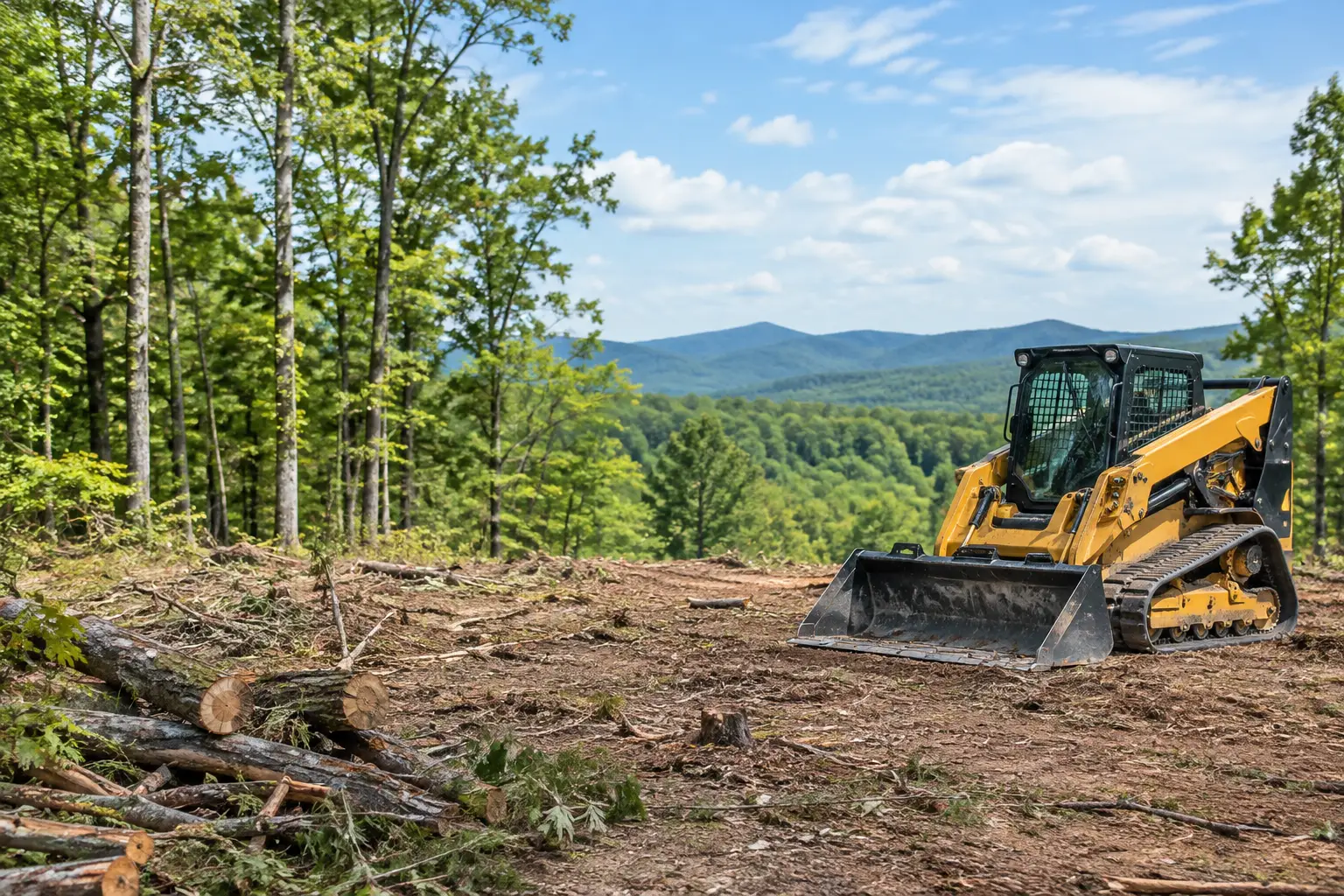
Next comes selective tree removal and brush clearing. Underbrush, vines, small volunteer trees, and invasive growth can be removed to open the property without sacrificing every mature tree. Bush hogging may be enough for areas with manageable brush and light growth, while denser woods may require tree removal and more substantial land-clearing equipment.
Stump grinding is often the next decision point. If the land will remain natural, some stumps may be acceptable away from traveled areas. If you are building, installing a lawn, creating a driveway, maintaining a field, or preparing for regular mowing, stumps and major roots need more attention. A stump left just below the surface can still damage mowing equipment, interfere with grading, and create a future settling spot.
Decide What Happens to Debris
Wooded lot cleanup should be planned before cutting begins. Tree trunks, brush, chips, and stump grindings all take up space, and every property has different needs.
Some landowners want usable firewood left on site. Others need all brush and logs removed to make room for construction or to improve the appearance of the property. In certain cases, chipped material can be used thoughtfully for erosion control or natural walking paths. It should not be piled against structures, left where it blocks drainage, or spread carelessly where a finished lawn is planned.
A professional crew should be clear about what will be hauled away, what will be processed on site, and how the site will look when the work is complete. Full cleanup is part of a properly finished land-management project, not an afterthought.
Plan for Drainage, Soil, and Access
Removing trees changes more than the view. Roots that once held soil in place and vegetation that slowed rainfall are no longer doing that work. This is why clearing should be coordinated with the next stage of the project.
If the lot will be graded, build drainage planning into that work from the beginning. Keep natural drainage routes in mind, especially near slopes, streams, ditches, and neighboring properties. Temporary erosion measures may be needed while the site is exposed. The right solution depends on the grade, soil, amount of clearing, and whether construction will begin right away or months later.
Access is equally important. A cleared path needs enough width, overhead clearance, and stable ground for construction vehicles, trailers, deliveries, or farm equipment. A narrow trail that works for a pickup may not work for a concrete truck, utility crew, or emergency vehicle. Planning access early can reduce rework and avoid removing additional trees later.
Know When Selective Clearing Is Better Than Full Clearing
Full clearing makes sense when a site needs a large building pad, commercial parking, agricultural use, or open construction access. Even then, preserving perimeter trees or strategic wooded areas can provide screening and reduce the bare, exposed appearance of a new site.
Selective clearing is often the better fit for homeowners who want to reclaim an overgrown yard, create usable outdoor space, improve visibility, or reduce tree hazards while keeping the character that made them buy the property. It can also be phased. Start with a house site, driveway, and safety zone, then clear additional areas once the project budget and final plans are settled.
The trade-off is that selective work requires more careful decisions and often more precision around retained trees, structures, and property lines. It is not simply a smaller version of land clearing. It is a targeted approach that should reflect how you will use the property for years to come.
Work With a Crew Equipped for the Conditions
Wooded lot work can involve climbing, controlled tree removal, brush cutting, stump grinding, hauling, and heavy equipment operation. The safest method depends on tree size, terrain, proximity to utilities, and available drop zones. A tree that appears straightforward can become complicated when it sits over a fence, beside a home, or on a wet slope.
Ask for a clear scope of work before the job begins. You should understand which trees and areas are included, whether stumps and roots are part of the estimate, how debris will be handled, and what the cleanup standard will be. A dependable contractor should also be prepared to explain how equipment will access the site and how the crew will protect the areas you are keeping.
For projects across Middle Tennessee, Men in Green brings more than 30 years of regional tree-care and land-management experience to site preparation, from hazardous tree removal to brush clearing, stump grinding, and final cleanup. The right crew can help you make a plan that fits the land instead of forcing the land into a rushed plan.
Prepare the Lot for What Comes Next
Once clearing is complete, walk the site again before moving to grading, fencing, construction, or landscaping. Check that protected trees remain undamaged, stumps are handled as agreed, debris is removed or placed properly, and drainage paths are still visible. If the ground is soft, give it time to settle before installing final features.
A well-prepared wooded lot should feel safer, more usable, and easier to maintain without losing more trees than necessary. The best next step is a clear on-site assessment, because the right preparation plan begins with seeing the property as it actually is, not as it looks from the street.