
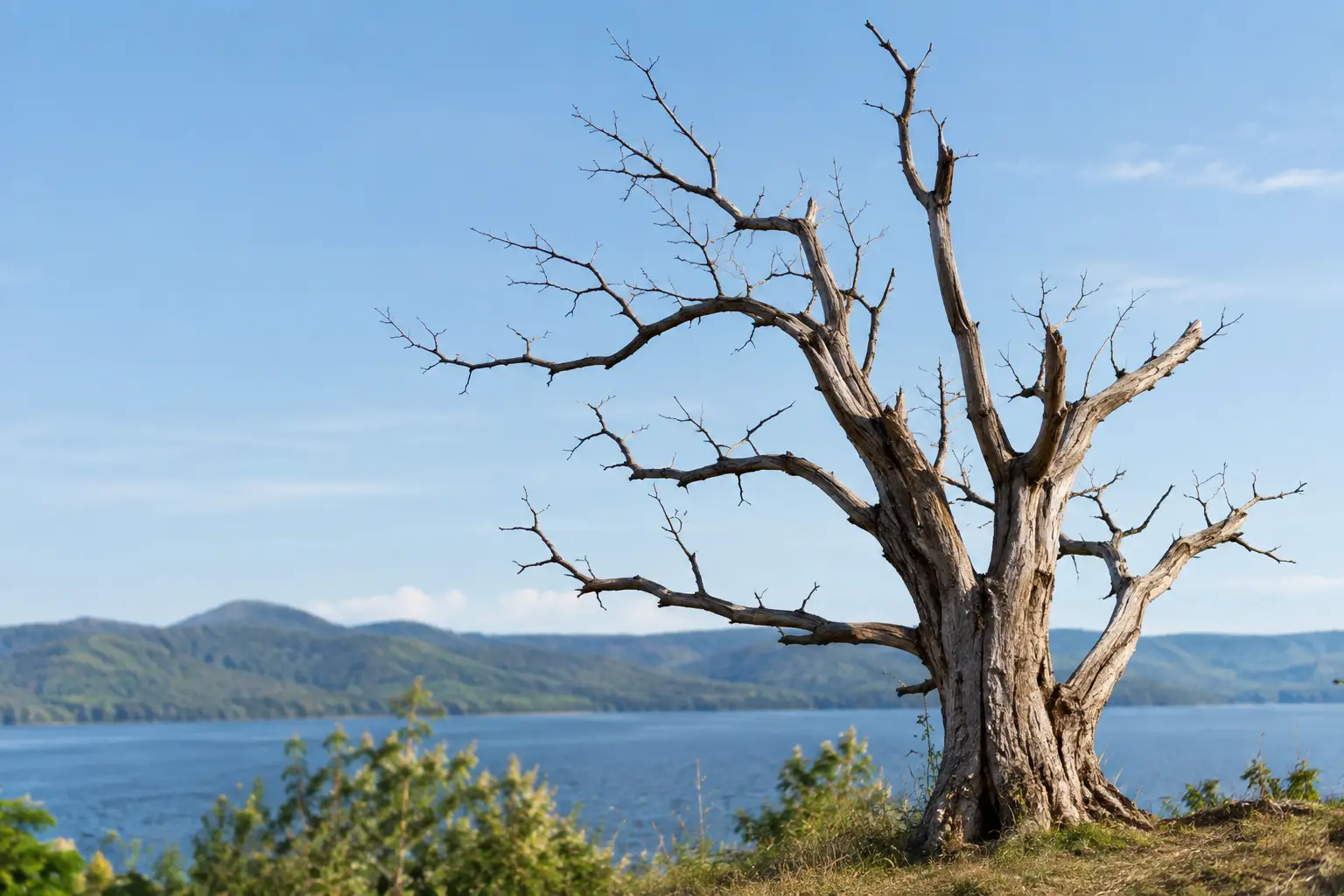
A dead tree does not follow a schedule. It can stand for years, then fail during one hard rain, a summer windstorm, or a quiet day when decay finally gives way. If you are asking, when do dead trees fall, the honest answer is that they fall when their remaining wood can no longer carry the weight of the trunk, limbs, or weather pressure placed on it. The challenge is recognizing that point before the tree reaches your roof, driveway, fence, power line, or neighbor’s property.
For Middle Tennessee property owners, dead trees deserve prompt attention. Our changing weather, saturated soil, high winds, ice, and heavy leaf growth can quickly turn a standing dead tree into a real hazard.
When Do Dead Trees Fall Most Often?
Dead trees can fall at any time, but failure is most common when weather exposes existing weakness. Wind pushes against the canopy and upper limbs. Rain softens the soil around compromised roots. Ice adds weight to already brittle branches. A tree that looked stable on a calm morning may not make it through an afternoon storm.
The highest-risk periods often include spring thunderstorms, summer storms with strong wind gusts, and winter ice events. In Middle Tennessee, heavy rain can be just as concerning as wind. If root decay has weakened the tree’s anchoring system, saturated ground may allow the entire tree to lean or uproot.
A completely leafless tree during the growing season is an obvious concern, but dead trees do not always look that clear-cut. A tree may have a living branch or two while much of its trunk is decayed. It may also die from the top down, leaving brittle upper limbs that can break without warning.
What Makes a Dead Tree Fall?
Death alone does not tell you exactly when a tree will fail. The deciding factor is structural condition. Some dead hardwoods remain standing for a period because the trunk is still solid. Others become dangerous quickly because insects, fungi, internal rot, or root damage have weakened the wood from the inside.
A dead tree is more likely to fall when it has one or more of these conditions:
- A noticeable lean that is new or becoming more severe
- Cracks, splits, or large cavities in the trunk
- Soft, crumbling, or hollow wood near the base
- Mushrooms or fungal growth around the trunk or roots
- Major dead limbs hanging over buildings, parking areas, or walkways
- Exposed, lifted, severed, or decaying roots
- Bark falling away in large sections and brittle branches throughout the canopy
No single sign provides a perfect timeline. A cavity may be manageable in one tree and a serious failure point in another. Species, trunk size, root condition, lean, and nearby targets all matter. This is why an on-site assessment is safer than guessing from a photo or trying to judge a tree by its leaves alone.
A Leaning Dead Tree Needs Faster Attention
Not every leaning tree is about to fall. Many healthy trees naturally grow at an angle and have developed roots to support that position. The concern is a lean that is new, suddenly worse, or paired with root movement, cracked soil, or exposed roots on the opposite side.
A dead tree leaning toward a home, road, play area, parked vehicles, or utility line should be treated as a priority. Keep people, pets, and vehicles out of the fall zone. Do not pull on the tree, cut roots, climb it, or attempt to change its direction with a truck or rope. Those actions can trigger the failure you are trying to prevent.
If a tree has already shifted after a storm, the safest approach is to have it evaluated and removed with the right equipment and a planned drop zone. Tight residential lots and commercial sites often require controlled dismantling rather than simply cutting a tree at the base.
Dead Limbs Can Fall Before the Tree Does
Property owners sometimes focus only on the trunk, but overhead deadwood can be the more immediate threat. Large dead limbs become dry and brittle. Wind, snow, ice, or their own weight can cause them to break and fall long before the main trunk fails.
Look up after storms and before spending time beneath mature trees. Dead branches often have no leaves during the growing season, lack small live twigs, and show peeling bark or broken ends. A limb over a patio, driveway, entrance, playground, or common area should not be ignored simply because the rest of the tree appears alive.
Routine pruning can remove hazardous deadwood from otherwise healthy trees. But when the trunk or root system is failing, pruning is not a substitute for removal. Cutting a few branches may reduce weight while leaving the core hazard in place.
How Long Can a Dead Tree Stand?
There is no dependable number of months or years. A small dead ornamental tree might become brittle within a season. A large oak or hickory can remain standing much longer, particularly in a dry, protected location. Yet standing longer does not mean standing safely.
Decay is often hidden. Wood can be badly compromised inside while the outside of the trunk still looks intact. Termites and other insects may speed deterioration, but they are not required for a dead tree to become unstable. Repeated storms, freeze-thaw cycles, and moisture entering old wounds all add stress over time.
The practical question is not whether the tree might remain standing another year. It is what could be damaged if it does not. A dead tree in a wooded area away from people, structures, roads, and utility lines may present a lower immediate risk. A similarly sized tree beside a house or busy parking lot is a different situation and should be addressed sooner.
What to Do After Storm Damage
After a storm, walk the property only when conditions are safe. Watch for hanging limbs, new leans, fresh cracks in the trunk, and soil lifting around the base. Stay clear of any downed or damaged power lines and contact the utility provider or emergency services as appropriate. Never assume a branch is safe because it is not visibly touching a line.
Take photos from a safe distance if you need them for insurance or property records. Then arrange an evaluation for trees that have shifted, lost major limbs, or show new damage. Prompt cleanup matters, but the first priority is keeping people away from unstable trees and limbs.
For HOAs, apartment communities, retail properties, and office sites, inspections after major weather help protect residents, customers, employees, and visitors. A dead or damaged tree near sidewalks, entrances, parking spaces, and service drives should be documented and addressed before normal activity resumes.
Why Professional Removal Is the Safer Choice
Dead trees are unpredictable because their wood may not hold as expected during cutting. A trunk can split, a limb can break early, or a decayed section can shift under its own weight. The risks increase around homes, fences, utility lines, and confined spaces.
Professional tree removal begins with assessing the tree, surrounding targets, access, lean, decay, and the safest method for the site. Depending on conditions, the crew may remove limbs in sections, use rigging to control pieces, or bring in equipment that keeps the work controlled and protects the property. Stump grinding can also help clear the area for replanting, landscaping, mowing, or construction plans.
Men in Green provides hazardous tree removal, storm cleanup, trimming, and stump grinding for property owners across Middle Tennessee. With more than 30 years of local experience, the team can give you a straightforward assessment of whether a tree needs immediate removal or can be managed through pruning and monitoring.
A dead tree rarely becomes safer with time. If you see a new lean, trunk decay, hanging limbs, or storm damage near something worth protecting, keep clear of the area and arrange a professional evaluation. Acting before the next round of wind or rain is usually the best way to protect your property and the people on it.